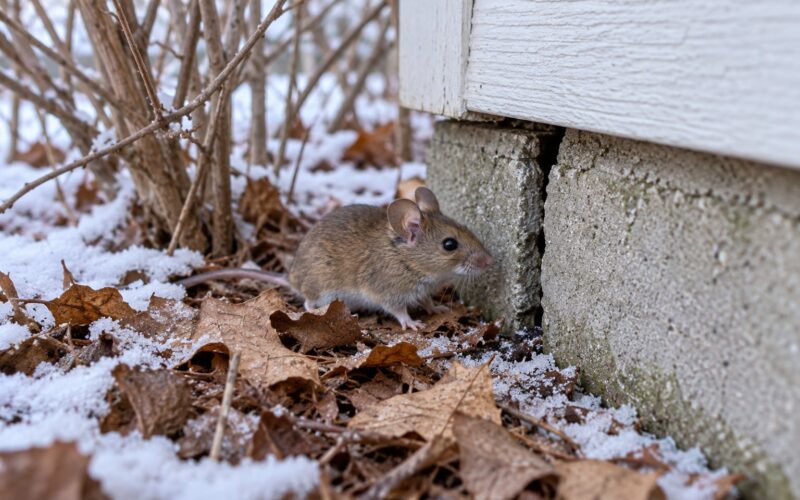
To keep mice out of a car engine bay, remove every food and scent source, block the openings they travel through from underneath, and make the space under the hood bright and exposed so it never works as shelter. Most rodents arrive from below, squeeze through gaps the width of a pencil, and settle into the air cleaner housing or the batting around the battery.
That last part is the reason people find a nest in a car they drive every week. The engine bay is warm, dark, quiet and full of soft material, and none of that changes just because the car moves regularly. A single rodent can strip insulation off a wiring harness overnight.
Repairs for chewed wiring run from a few hundred dollars for a small section to well into the thousands when a whole harness has to be replaced, and insurance often treats rodent damage as a comprehensive case rather than a collision one. Prevention costs a roll of hardware cloth and an afternoon. Do it in late summer, before cold weather pushes the population indoors, and the problem usually never starts.
What You Need
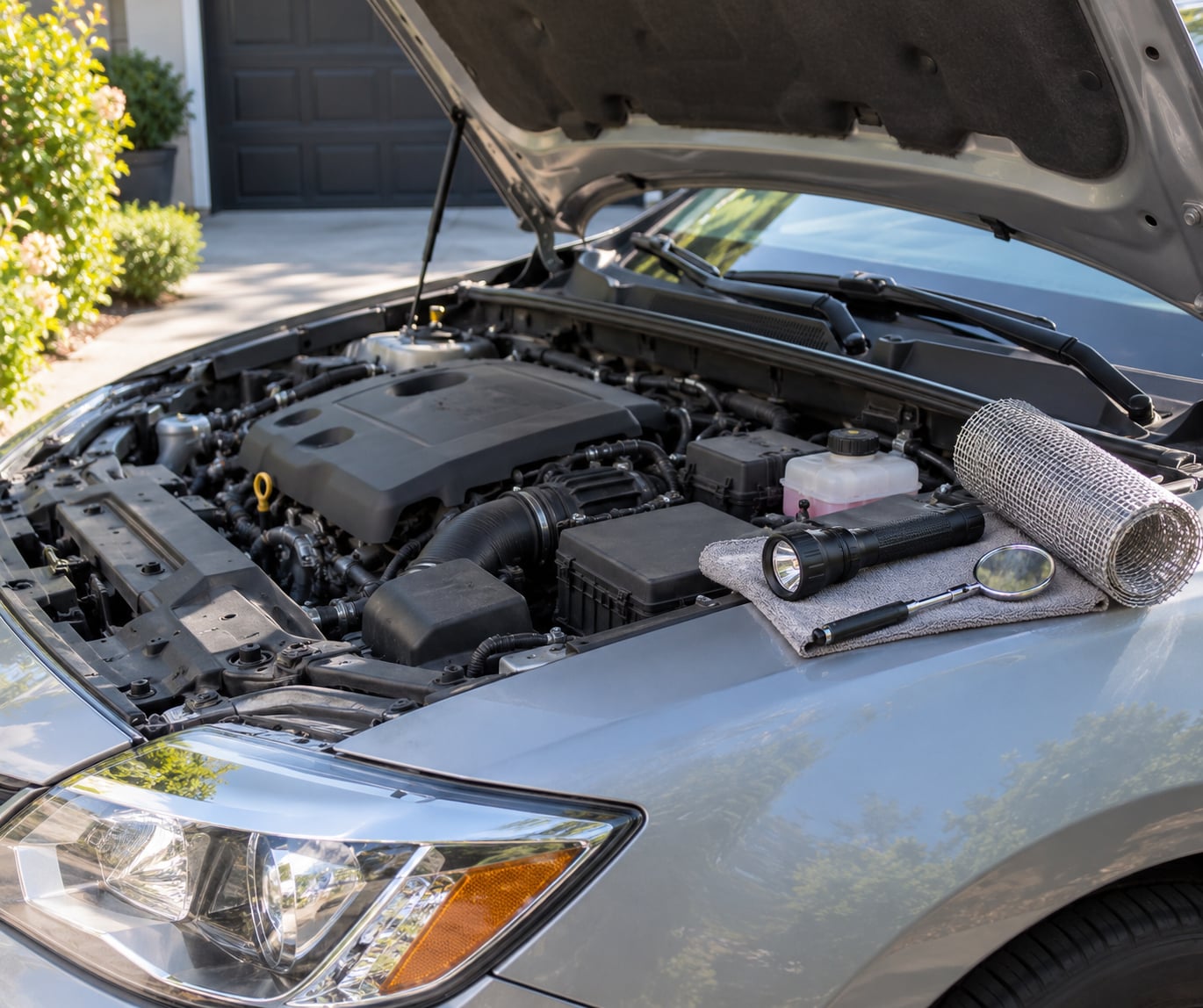
Gather everything before you open the hood, because half-finished jobs tend to end with the hood propped and the bay half-cleaned. Most of this list is cheap hardware-store stock.
- Safety gear: cut-resistant gloves, eye protection, a disposable dust mask and a headlamp or handheld flashlight. You will be working blind with one hand on the light.
- Inspection tools: a small inspection mirror and a long flathead screwdriver for probing gaps you cannot see into.
- Cleaning supplies: paper towels, a stiff nylon brush, a bucket, and an enzyme cleaner or a dilute disinfectant labelled safe for automotive plastics.
- Containment: a sealed bag or bucket for debris, and a shop vac with a hose attachment. Do not run a bare high-pressure washer over wiring connectors, sensors or the battery area.
- Exclusion materials: quarter-inch galvanized hardware cloth or stainless steel mesh, cut with aviation snips, plus automotive-rated sealant, hot melt glue or heavy zip ties to hold it in place.
- Optional deterrents: cotton balls soaked in peppermint oil for a short-term boost, and a 12V ultrasonic deterrent with a paired strobe light for vehicles that sit for weeks at a time.
Skip the rodent poison. It kills the hawks and owls that keep your local mouse population in check, and it does nothing about the gap the animal is using to get in.
Step-by-Step: Inspect, Clean, and Block Entry Points
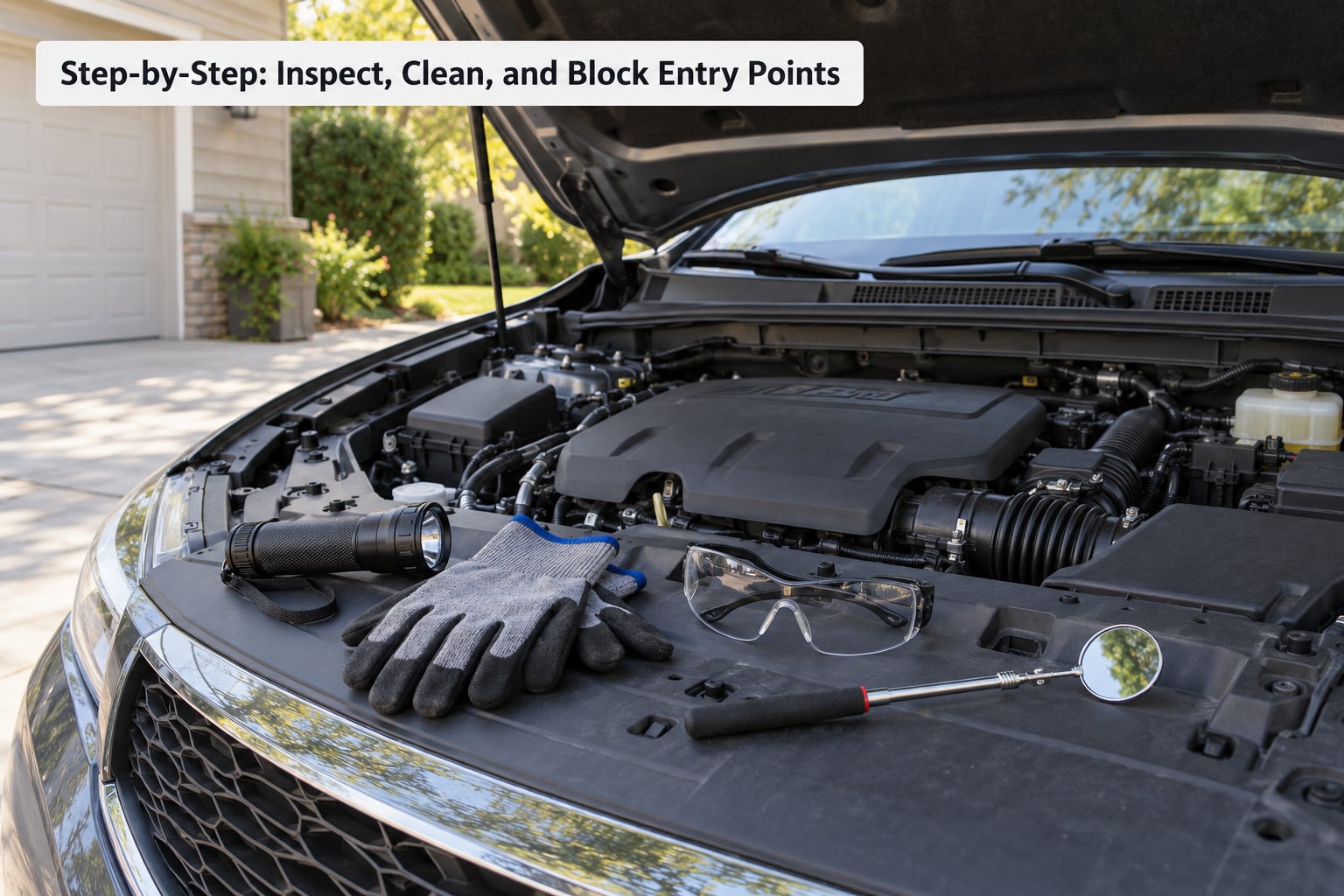
1. Confirm the Problem and Locate Entry Points
Look for the evidence before you buy anything. Mouse droppings are small, dark and tapered, about the size of a grain of rice, and they cluster along edges and in corners where the animal travels. Gnawed wire insulation leaves fuzzy, stripped strands and exposed copper. Greasy rub marks along the firewall and the underside of the hood point to a nightly route.
Finding a nest matters most. Look inside the air cleaner housing, around the battery and under any insulation blanket, because vacuuming the visible edges misses exactly where they nest. Nests are built from whatever is soft nearby, including chewed dryer sheets and paper towels.
Now find the route. Rodents travel from underneath, so work along the cowl panel, the air intake ducting at the base of the windshield, the wheel well liners, the firewall grommets and the evaporator drain tube, which is a favourite path because it is a warm, wet tunnel straight into the cabin. A mouse fits through a quarter-inch gap; anything smaller than that and you are wasting your time.
Scratching at night is often a bird, a branch, or a belt. Confirm with droppings before you tear the bay apart.
2. Prepare the Engine Bay Safely
Let the engine cool completely. An exhaust manifold after a highway drive stays hot enough to burn you through a glove, and it is also the last place you want an aerosol or oil mist.
Park on level concrete, in daylight if you can, with the parking brake set and the transmission in park. Open the hood fully and secure it with the prop rod or strut. Do not rely on a partially latched hood or on the hood alone to hold itself up while your hands are inside the bay.
Read the owner’s manual for anything electrical before you disconnect anything. Photograph the layout of anything you unplug, label connectors with masking tape, and never force a connector. Put the key away so nobody starts the vehicle while you are underneath the hood.
3. Remove Droppings, Nests, and Food Sources
Bag nests and droppings rather than sweeping them dry. Dry sweeping lifts dust and particles into the air where you and anyone parked nearby breathe it, and it spreads the scent marking that draws the next visitor to the same corner.
Dampen the debris first, scoop it into a sealed bag, and wipe the surfaces with a cleaner rather than just rinsing them. Mouse urine leaves a scent you cannot see but that other rodents read clearly, so a visual-only clean tends to invite a return visit within days.
Clean the whole bay, including under the air cleaner lid, around the battery and along the firewall seams. For nests built from shredded insulation, pull the material out rather than pushing it deeper into the housing, and replace any insulation batting that was packed around the battery.
Then cut off the supply outside the car. Take in birdseed, sweep up fallen fruit, move trash into hard-sided containers, and clear clutter within a few steps of where the vehicle sits. A garage with a bird feeder and an open trash can is a banquet that no repellent will out-compete.
4. Seal Gaps Without Blocking Vehicle Parts
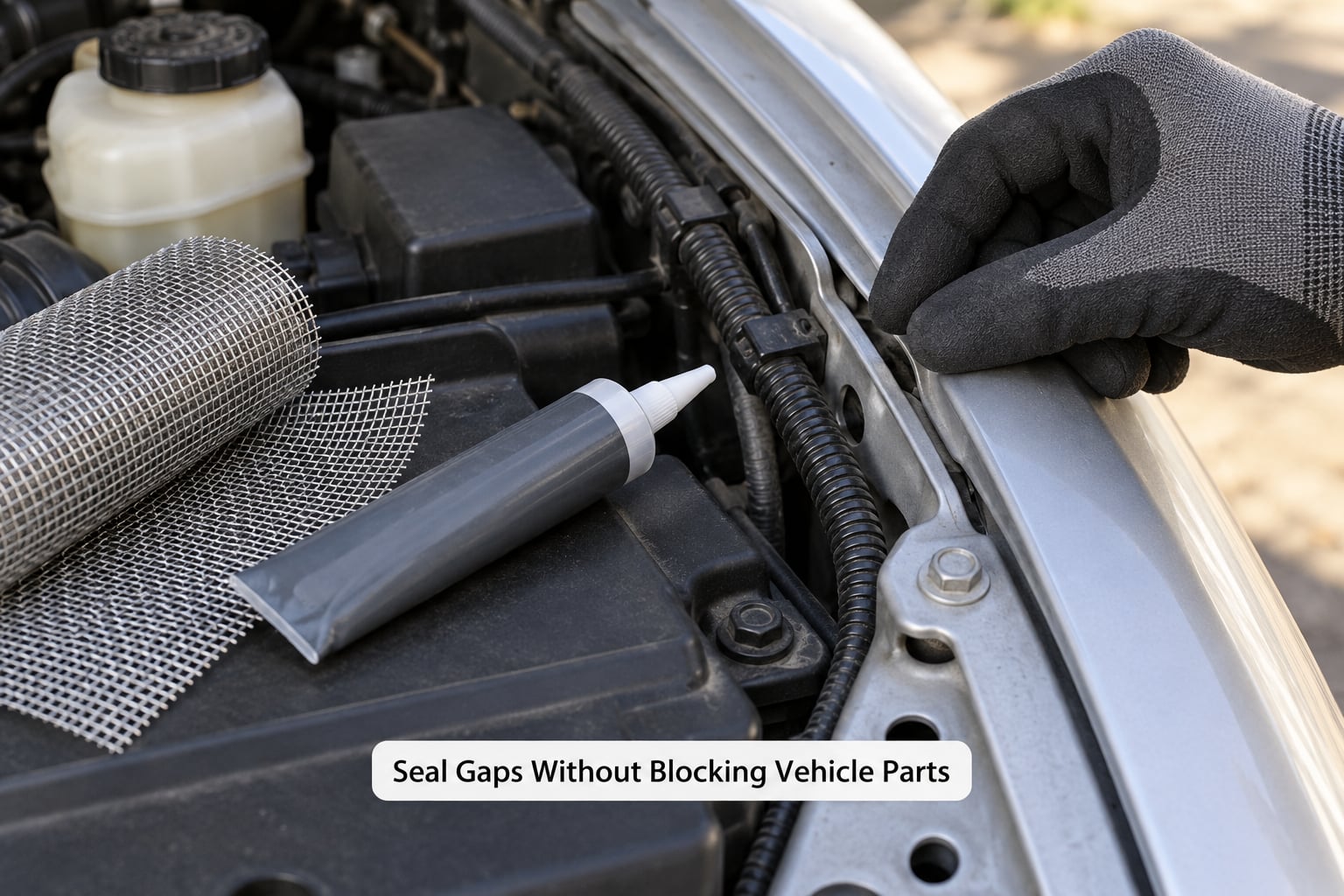
Cut quarter-inch hardware cloth or stainless steel mesh slightly larger than each opening, then fasten it with automotive sealant, hot melt glue or zip ties. Cut, do not fold, so there is no ragged edge a pair of incisors can work at.
Cover the cowl intake and the base of the windshield ducting, the open ends of the air cleaner housing, the wheel well openings where hoses pass through, and the firewall grommets that carry wiring and HVAC lines. On a cold-weather market, the evaporator drain tube deserves its own small piece of mesh plus a check of the exterior condensate port.
Everything you close has to keep doing its job. Leave clearance around the hood latch, the hood prop, the hinges and the gas struts. Stay clear of the throttle body, the brake fluid reservoir, coolant overflow and any air intake the engine actually breathes through, because sealing those causes overheating or running faults that cost more than a mouse ever would.
Run the engine for a few minutes afterwards and listen. A change in idle, a hesitation or a check-engine light means you blocked or strained something, and you should undo it before driving.
5. Protect Wires and Reduce Attraction
Some vehicles ship with soy-based wiring insulation, which is softer and more appealing to rodents than conventional coating. If your vehicle is known for it, extra conduit around vulnerable runs is worth the effort, but keep wraps loose enough that no wire traps heat or rubs against a moving part.
Light does more good than most people expect. A bright LED fixture or a solar blinking lantern kept over the hood removes the dark shelter the animal wants, and users parked near wooded edges report years without a single incident from that one change. Leaving the hood cracked or propped open works for the same reason, and it costs nothing.
For vehicles that sit for long stretches, an ultrasonic deterrent hardwired to the 12V system works best when paired with a strobe light. Smell-based options are a short bridge, not a solution: peppermint oil on cotton balls fades within days and does nothing against an established nest.
You can also reduce pressure from outside the bay. A hunting cat kept outdoors at night, or bait stations placed around the property rather than near the vehicle, tend to lower the local population enough that cars stop being targeted.
6. Recheck the Bay and Prevent Future Visits
Check the bay again after the first cold snap, after storms, and any time the vehicle has sat for a week or more. Fresh droppings, new rub marks or a disturbed mesh panel mean something is still getting through, and the fastest way to find it is a flashlight along the underside and behind each sealed panel.
Build the check into your routine rather than waiting for damage. Once a month, look under the hood with the engine cold. Once a season, confirm the mesh is still seated and the sealant has not cracked.
Stop and get help in a few situations. A live animal inside a hot engine bay should never be chased, and it should never be started while it is there. Damaged wiring, a chewed battery terminal or nests wrapped around moving belts need a technician, and if rodents keep arriving after the openings are sealed, a wildlife professional is worth the call.
Common Mistakes When Keeping Mice Out of a Car Engine Bay
- Spraying repellent into a warm engine bay. Aerosols and oil-based products land on hot manifolds and plastic, and the vapour near an exhaust component is a fire risk. Use only cool, cool-soaked cotton balls and keep them away from anything that heats up.
- Leaving the nest behind after cleaning. Skipped corners and the inside of the air cleaner housing are why people find a second nest a fortnight later.
- Blocking an air intake. Engine-bay rodent covers exist for a reason: they shroud the whole bay while leaving ventilation clear. Sealing the wrong duct or clamping the cowl shut can overheat an engine in traffic.
- Using rodent poison. It rarely solves an entry problem, it puts pets and children at risk, and secondarily poisoned hawks and owls are the reason many local rodent populations stay high in the first place.
- Relying on mothballs. They are a restricted-use pesticide, they fade within weeks, and the vapour is toxic to people and pets. Forum users trying them describe them as hit or miss at best.
- Sealing a gap without checking what it does. Latch mechanisms, hood props and moving hinges get blocked, and a cover you installed wrong can trap a hood gap that is an entry route.
- Assuming a car cover solves it. A cover can make things worse. It gives rodents a quiet, sheltered ramp straight to the engine bay and keeps the whole area dark, which is exactly the combination they are looking for.
- Running the engine in an enclosed garage. That is a carbon monoxide risk and has nothing to do with rodents, but it is the most common accident in this whole process.
Frequently Asked Questions
How do I keep mice out of a car engine bay long-term?
Block them out physically: cover the cowl intake, air cleaner housing openings, firewall grommets and wheel well pass-throughs with quarter-inch hardware cloth or stainless steel mesh fixed with automotive sealant. Add a bright light over the hood and remove food sources nearby. Smell-based deterrents fade within one to three weeks and cannot replace exclusion.
Can a mouse live in my engine bay?
Yes. Rodents nest in the engine bay more often than most owners expect, usually inside the air cleaner housing, under a battery insulation blanket or behind a firewall panel, where it is warm, dark and quiet. A single animal can strip insulation from a wiring harness in a night, which is why a quick look under the hood is worth doing before cold weather arrives.
What do I do if a mouse is still inside the car?
Do not chase it and never start the engine while it is inside. Let the vehicle cool, open the hood, and place a trap or a live trap at the opening it is likely using, or simply leave an exit route and block the entry points. If the animal is somewhere you cannot reach safely, a wildlife professional is the right call rather than reaching into a hot bay.
How do I remove mouse droppings safely?
Dampen them first, then scoop them into a sealed bag and bag or bin the liner. Never sweep droppings dry, because the dust goes airborne and stays in the bay. Clean the surfaces with an enzyme cleaner or a dilute automotive-safe disinfectant so the scent marking goes with the debris, and wear gloves and a mask.
Do peppermint oil or mothballs actually work in an engine bay?
Peppermint oil gives a short-lived boost on cotton balls and evaporates within days, so it is a bridge while you seal entry points, not a fix. Mothballs fade faster, need constant reapplication and are a restricted-use pesticide whose vapour is harmful to people and pets. Neither will stop a mouse already nesting in the air cleaner housing.
When should I call a mechanic or a wildlife professional?
Call a mechanic when wiring insulation is stripped, a battery terminal is chewed, or a nest is wrapped around a belt, fan or pulley. Call a wildlife professional if you suspect an animal is living inside the vehicle, or if fresh droppings keep appearing after every opening you can reach has been sealed. Do not start the engine until the bay has been checked.
Start with a cold-engine look under the hood. If you find droppings or a nest, clean it out properly and replace any packed insulation around the battery, then seal the cowl intake, air cleaner openings, firewall grommets and wheel well pass-throughs with quarter-inch mesh. That, plus a light over the hood and no food left nearby, is what keeps mice out of a car engine bay after the first winter night. Photograph any damage before repairs begin, so you have a record if you need to raise a claim.