If bug bites that itch at night are waking you up, the itch is usually not proof that something is crawling on you at that moment. It is your immune response settling into its second phase while your body winds down for sleep. Warmth, a natural drop in cortisol, warm bedding and a quiet room turn a mild daytime irritation into the one thing you can think about at 3 a.m.
The short version: a feeding insect leaves behind saliva proteins, your immune system reacts with histamine hours later, and the evening hours make that reaction louder. In most households the usual suspects are mosquitoes, fleas, bed bugs, mites and gnats or midges, and the bites alone rarely identify the culprit with certainty. What identifies it is the pattern on your skin plus what you find in the room.
- Mosquitoes — scattered itchy welts on exposed skin, noticed in the morning after a summer evening outdoors.
- Fleas — clusters of small bumps around the ankles and lower legs, often traced to a pet, carpet or upholstered sofa.
- Bed bugs — bites in a short line or a group of three or four on exposed skin, plus evidence in mattress seams or bed frame joints.
- Mites and chiggers — very itchy bumps that stay angry for days, usually after a lawn, garden or bird roost nearby.
- Gnats and midges — small bites on the face, hands and any uncovered skin, sometimes with a stinger still in view.
- Spiders — rare in most homes, usually two nearby marks and a single prominent bite rather than a pattern.
Everything above is general information for adults and older children, not a diagnosis. If bites come with breathing trouble, facial swelling or a spreading rash, treat that as urgent and see the triage section below.
Why Do Bug Bites Itch More at Night?
There are four things happening at once after dark, and each one alone is small. Together they explain why the same bite that barely registered at 4 p.m. has you scratching at 1 a.m.
Your cortisol falls. Cortisol is a circadian hormone that runs high in the morning and drops toward midnight. Research on itch specifically points at a link between the evening drop in cortisol and a stronger itch sensation, which is why people who react to bites describe a flare at bedtime rather than a constant itch.
Blood flow to the skin rises. In the evening your skin receives more blood, and warmth makes that worse. Bedding traps heat against your skin for hours. A welt with more blood in it feels warmer and tighter, and warmth alone increases itch.
Nothing distracts you. During the day you are moving, talking and working. Lying still in a warm bed with nothing to do is the exact conditions under which you notice an itch you had been ignoring for six hours.
The immune response is delayed. Biting insects inject anticoagulants and proteins. Your immune system responds by releasing histamine at the site, which raises blood flow and causes swelling and itch. That reaction is not always instant. People commonly report bumps from a bite showing up hours later, and flare-ups a day or two after the original exposure. Forum threads on this topic are full of people who assumed the new bumps meant a fresh bite from something still in the room.
Then there is the scratch loop, which explains why one scratch ruins the whole night. Scratching feels good briefly because it triggers the pain fibres that damp itch signals. It also releases more histamine from local mast cells, so the welt gets redder, itchier and more reactive. Many people describe the relief as lasting about a minute and the flare as lasting hours.
So yes, it is normal for bug bites to itch more at night. It is not, by itself, a signal that an infestation is worsening.
Common Causes of Bug Bites That Itch at Night
Here is how the usual suspects differ, and what each one looks like on your skin. Nobody can identify the source from the bite alone, so treat this as a set of strong possibilities to check against the evidence in your room.
Mosquitoes
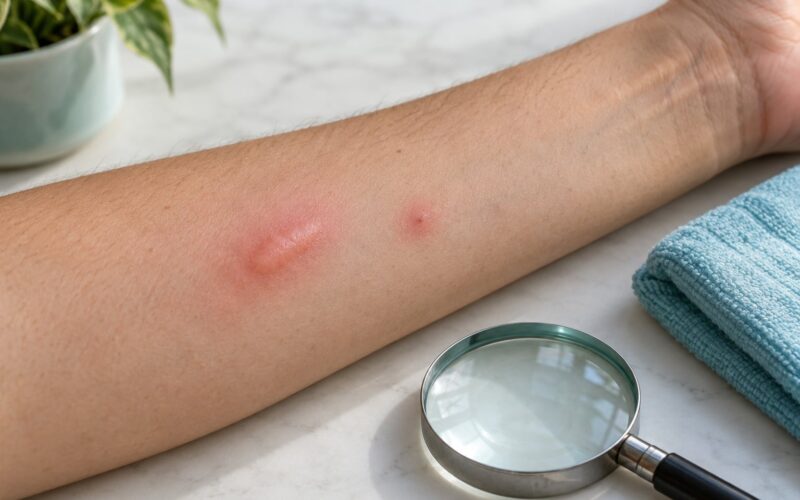
Mosquito bites produce a small raised welt, usually red and intensely itchy, often with a tiny darker point in the centre. They land on whatever skin is uncovered, so the ankles, hands, arms and neck carry most of them. You rarely feel the bite itself. Many people only notice in the morning, which is why a fresh set of mosquitoes after a summer evening outdoors reads as an itch that arrived overnight.
Reducing future bites is straightforward: an EPA-registered repellent applied as directed, long sleeves at dusk, screens on windows, and clearing standing water in gutters, planters and tires. A fan pointed at your skin also reduces landings, which surprises people who expect it to do nothing.
Fleas
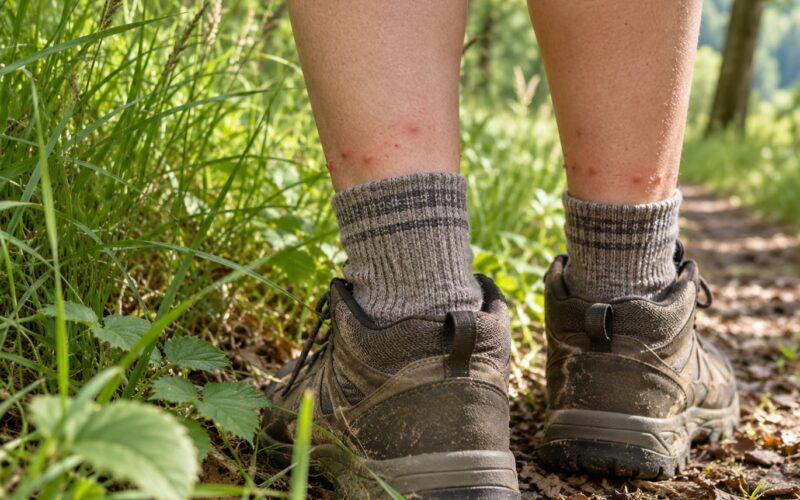
Flea bites are small, tightly clustered bumps that show up around the ankles, behind the knees and at the waistline. Fleas feed on exposed skin while you sit or lie still, which is exactly what you do in a favourite chair or on the sofa at 10 p.m.
The thing worth checking is not the bite but the evidence. Look at your pets for scratching, check the carpet and rugs for small dark specks that look like ground pepper, and inspect upholstery. Fleas move off the animal onto the surrounding area, so a pet that seems clean can still sit on top of a flea problem.
Bed Bugs
Bed bug bites usually show up on exposed skin and often appear in a neat line or a short row, sometimes a cluster of three or four, because the bug moves along the skin while feeding. Individual bites are generally small, often under half an inch (12 mm). Feeding usually happens when you are asleep and asleep people rarely feel the bite, which is why nobody in the house noticed anything happening.
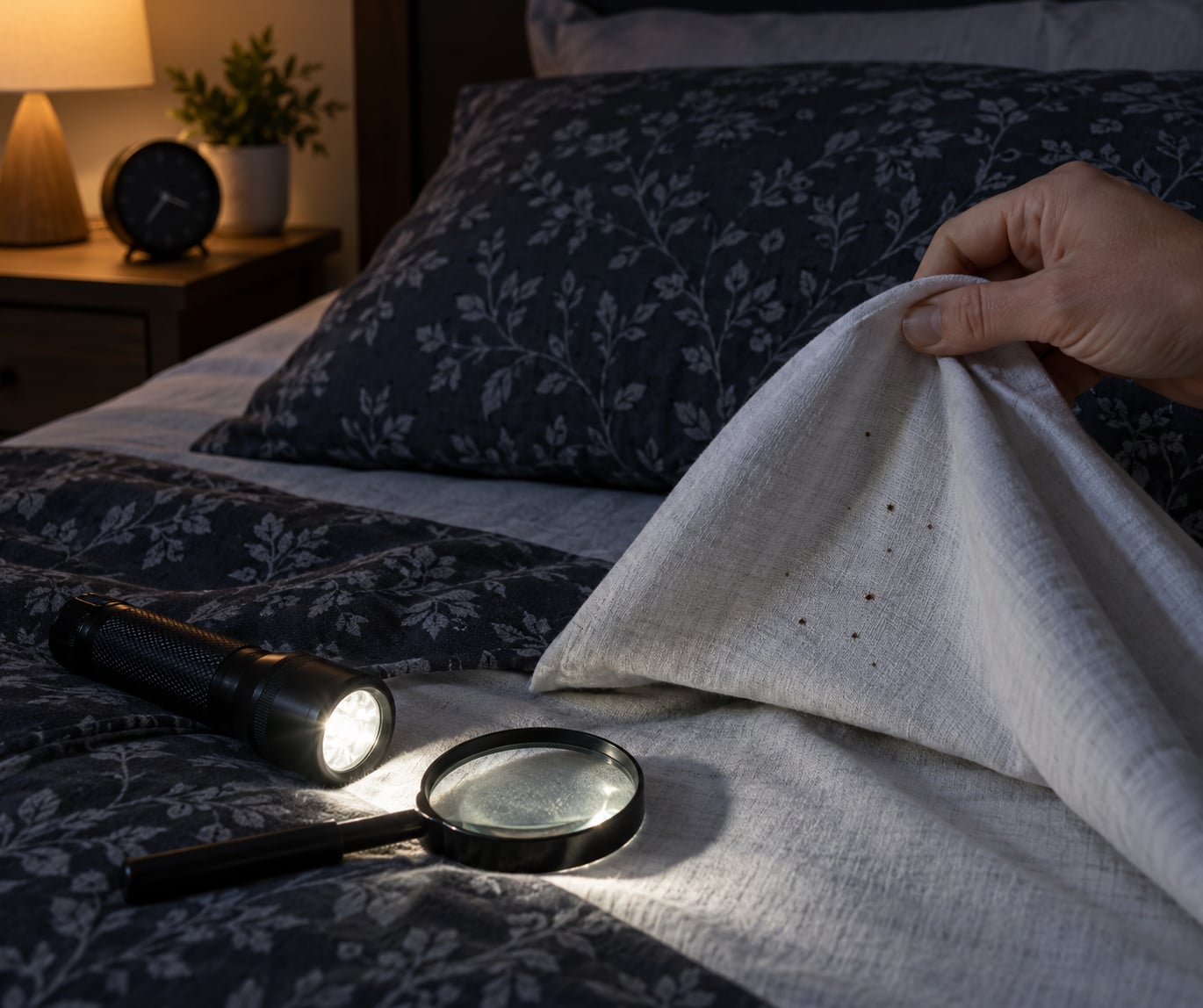
Adult bed bugs are visible to the naked eye but good at hiding. Look along mattress seams and piping, inside bed frame joints and screws, behind the headboard, and at the edge of the sheet. Fresh evidence includes dark droppings that look like pepper grains, shed skins, rust-coloured blood smears on fabric, and a sweet musty odour in a heavily infested room. Inspecting thoroughly and finding nothing is genuinely common, since bed bugs hide in cracks and deep seams you cannot see past.
Mites, Spiders, and Other Possibilities
Chiggers are the larval stage of a mite, and they do not burrow into skin. They attach to the surface, inject digestive enzymes, and stay there for a few days, which is why the itch builds slowly and stays fierce. Bites cluster around ankles, waist and other areas where clothing pressed against skin, usually after gardening or a walk through long grass. Bird and rodent mites are tiny and mostly invisible. People often wake up with new bites the morning after birds start nesting near a window, or after rodents were active in a ceiling void.
Scabies is different enough to flag. It is caused by a mite that burrows in the outer layer of skin, shows up as very thin wavy or serpiginous lines, and is contagious between people. Household spread happens through skin contact or shared bedding, and it needs medical treatment for everyone at once, so it is worth confirming rather than guessing.
Spider bites are uncommon in homes. Two nearby puncture marks and one prominent bite, often on a hand or foot and often with pain arriving first and itch later, fits more closely with a spider than with an insect. Brown recluse bites can cause tissue damage, and any bite that turns dark, blistered or necrotic needs a clinician, not a web search.
Finally, not everything that itches is a bite. Dry skin, eczema, contact dermatitis from detergent or fabric softener, and reaction to a new soap all produce itchy raised bumps that get blamed on insects. Forum posters describe this loop constantly: they inspect the mattress, find nothing, and assume they are imagining the bumps. They are not imagining them. When there is no evidence of insects anywhere in the room, a skin condition or a reaction to something you changed in the wash is the more likely explanation.
Nighttime Bite Clues: What to Check
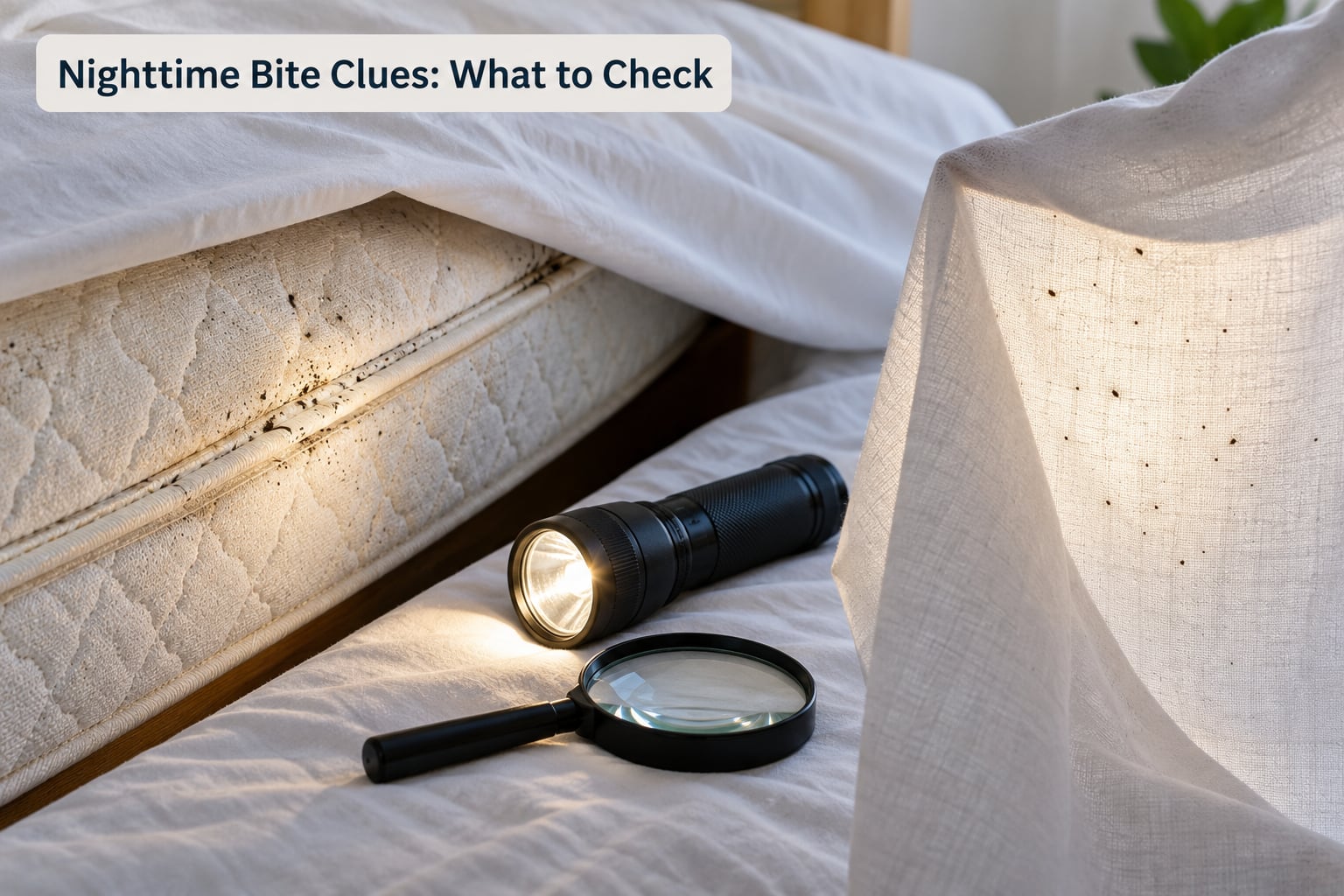
Here is a safe inspection routine that answers the question people ask most often: why am I getting bitten but cannot find anything?
- Bed first, before you strip the covers. Run your fingers along mattress seams and piping, especially the head end. Check the box spring, the screws and joints of the frame, behind the headboard, and the slats underneath.
- Hold sheets up to light. Look for rust-coloured smears or small dark specks on the fabric, especially near the seam. Check the pillowcase too.
- Check the pets and their bedding. Scratching, small dark specks on bedding and carpet grit in the seams all point to fleas rather than something in your mattress.
- Look at windows and wall seams. Rippled screens, gaps under exterior doors, and a new bird nest near a window point to outdoor biters getting in.
- Think about the last two weeks. Travel to a hotel or hostel, a new guest, a second-hand mattress, a new pet, new laundry detergent, a new body wash, and recent lawn or garden work are all relevant.
- Compare against your body, not against the bed. Bites on the neck, hands and arms in summer point outdoors. Bites on ankles and lower legs point to fleas. Bites only on exposed sleeping skin point to bed bugs.
Do not tear apart furniture or spray products on a hunch. Repeated do-it-yourself spraying often fails because eggs and larvae survive, and the cycle restarts. If the evidence points somewhere specific, that is a cleaner starting point than a shotgun approach.
One more common question: why is it always me? People differ in the carbon dioxide they produce, their body heat, their skin chemistry and their immune response. Some people react strongly to small bites and barely notice others, so being the only itchy person in the house is not proof the other person was not bitten.
Which Bugs Bite at Night?
| Suspect | Most active | Typical bite location | Appearance and pattern | Clue in the home | Felt when bitten? |
|---|---|---|---|---|---|
| Bed bugs | Night, when you are asleep and still | Exposed sleeping skin: hands, arms, neck, shoulders | Small red welts, often in a line or a group of three or four | Dark specks, shed skins, blood smears on sheets, mattress seams and frame joints | Rarely |
| Fleas | Any time, often while seated or lying still | Ankles, lower legs, behind knees, waistline | Tight clusters of small bumps that itch repeatedly | Pet scratching, pepper-like specks on carpet and bedding | Sometimes |
| Mosquitoes | Dusk to dawn outdoors, and indoors if screened-in | Any exposed skin, ankles and hands most often | Scattered individual welts, sometimes with a dark centre | Open windows, torn screens, standing water nearby | Usually not |
| Chiggers | Daytime outdoors; itch peaks later | Where clothing pressed against skin: ankles, waist | Very itchy bumps that stay angry for days, often close together | Recent lawn, garden, tall grass or bird nesting area | No |
| Bird or rodent mites | Night, when you are asleep | Anywhere, often more on the arms and trunk | Many small similar bumps appearing overnight | Nest or entry point near a window, rodent activity | No |
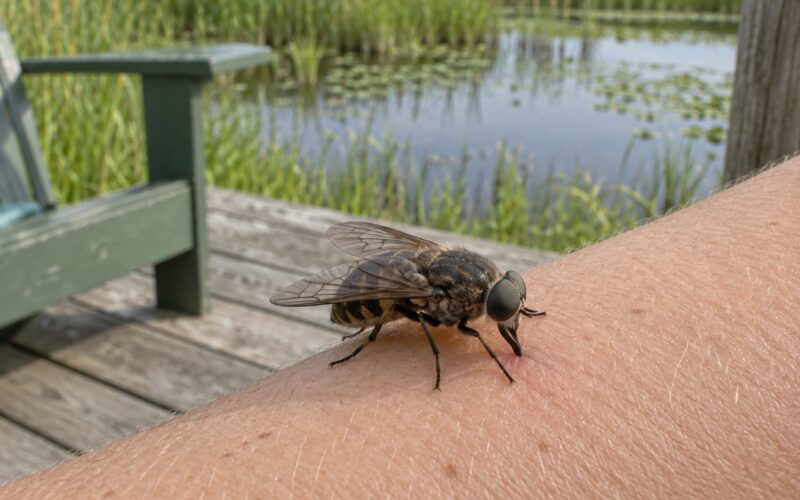
| Gnats and midges | Daytime and early evening near water | Face, hands, forearms | Small painful red bumps; a dark point may remain | Swampy or damp ground, water nearby | Often yes, a short sharp sting |
| Spiders | Incidental, often when disturbing a corner | Hands, feet, legs | Single bite, sometimes two nearby marks, pain before itch | None indoors | Often a sharp pain |
How long the itch lasts is a useful second clue. Mosquito welts usually settle within a day or two. Flea bites tend to flare, calm and flare again each day or so. Bed bug bites can itch for a week or two and appear in successive waves as bites from different nights surface. Chigger and mite bites are the stubborn ones, lasting a week or more because the mite or its enzyme stays active at the surface.
If itching continues for weeks with no new bites and no evidence in the room, that pattern points away from an active insect problem and toward a skin condition or reaction.
How to Stop the Itching Safely
These are general comfort measures. Follow the label directions on any product, and ask a pharmacist what is appropriate for you if you take other medicines, have a pregnancy, or are treating a young child.
- Wash the area gently. Soap and cool water, then pat dry. Cleaning reduces irritation and helps you notice whether the rash is spreading.
- Use a cold compress. Ice wrapped in a thin cloth, applied for about 10 to 15 minutes at a time. Never place ice directly on skin.
- Try an over-the-counter antihistamine. Oral antihistamines can reduce itching from an allergic reaction; follow package directions and note any drowsiness.
- Consider a 1% hydrocortisone cream for short-term use on the bite area, following the label. Avoid it on broken or infected skin.
- Moisturise with a fragrance-free product. This helps when dry skin is part of the problem.
- Try not to scratch. If you need to, use a cold compress instead. Keeping nails short helps.
On the home side: wash bedding and clothing on the hot cycle, vacuum carpets and upholstery regularly, and clean pet bedding too. For mosquitoes use an EPA-registered repellent, screens on windows, and drain standing water. For fleas, treat every pet in the home at the same time, following your veterinarian’s directions, since untreated pets keep reinfesting the house.
One honest word about home remedies. Baking powder pastes, essential oils and DIY mixtures can irritate skin and make itching worse. If you try something and the burning rises, stop.
When to Seek Medical Help
Most bites settle down with simple measures. These situations are different, and the list below is not the place to be patient.
Call emergency services right away if someone has trouble breathing, wheezing, throat tightness, swelling of the lips, tongue, face or throat, dizziness or fainting after a bite. That pattern can be a severe allergic reaction, and minutes matter.
Contact a clinician the same day if you develop a fever over 100.4 F (38 C), chills, pus-filled blisters, increasing pain, red streaks spreading from the bite, or swelling that keeps growing. Scratching is the usual route to a skin infection, especially in children.
Book an appointment if the itching lasts more than about two weeks, keeps returning with no new exposure, spreads across large areas, or you see a spreading red rash. Lyme disease and other tick-borne illnesses often show a rash that expands over days rather than a single welt, and they are time-sensitive, so get advice early if a tick was attached or found.
See a clinician for confirmation if you have an expanding ring of redness, two marks that look like a paired bite, tissue that darkens or blisters, signs of scabies in the household, or bites in a child so severe they are not sleeping or the skin is breaking down. Children can react far more strongly to mosquito bites than adults, which is sometimes called skeeter syndrome, and that is worth a professional’s opinion.
Ask a pharmacist before combining any two over-the-counter products, and see a doctor if your symptoms are persistent, severe or simply not fitting anything described here.
Frequently Asked Questions
What are the most common bug bites that itch at night?
Mosquitoes, fleas and bed bugs are the usual suspects. Mosquitoes leave scattered welts on exposed skin, fleas cluster around the ankles and lower legs, and bed bugs leave bites in short lines or groups of three or four on skin a sleeping person leaves uncovered. Mites, chiggers, bird mites and gnats are the next most common.
Do bed bugs bite at night and do you feel them bite?
Bed bugs feed at night, mostly between midnight and five in the morning while you are asleep. Most people feel nothing at all during the bite. The itch usually starts after you wake up, which is why people assume nothing happened during the night, and why bites on only exposed skin such as the hands, neck and shoulders are a common clue.
Why do bug bites itch more at night?
Four things stack up after dark. Cortisol falls toward midnight and a lower level tracks with a stronger itch response. More blood flows to the skin, and warm bedding makes that warmth worse. Your immune reaction to insect saliva is delayed and often peaks hours later. And lying still in a quiet room removes the distractions that were hiding the itch all day.
How long do itchy bug bites usually last?
It depends on the culprit. Mosquito welts usually calm within a day or two, flea bites flare and settle over several days, bed bug bites can itch for a week or two in successive waves, and chigger or mite bites are often the longest at a week or more. Itching that continues for weeks with no new bites is a reason to see a clinician rather than keep treating it as insects.
Can a bug bite rash be something other than an insect bite?
Yes, and it is one of the most common causes of confusion. Dry skin, eczema, contact dermatitis from detergent or fabric softener, folliculitis and reactions to new soaps all produce itchy raised bumps. Delusory parasitosis is the case where someone is convinced bugs are crawling on them and none are there. When a room shows no evidence of insects, a skin condition becomes the likelier explanation.
What to Do First
Start with the pattern, not the guess. Note where the bites are on your body, when they appear, and whether anyone else in the house is reacting.
Next, inspect the places that actually hold evidence: mattress seams and piping, bed frame joints, behind the headboard, sheets held up to light, pet bedding and carpets, window screens and wall seams. Two minutes with a flashlight answers more than an evening of guessing.
Then cut off new bites. Use an EPA-registered repellent and long sleeves at dusk, screens on windows, standing water drained, and veterinarian-directed flea treatment for every pet in the home at the same time.
While you wait, cool the itch rather than chase it: wash gently, use a cold compress, try an antihistamine or 1% hydrocortisone per the label, moisturise with a fragrance-free cream, and keep nails short.
Finally, watch for the warning signs. Trouble breathing, swelling of the face or throat, fever, pus, spreading redness or severe pain means see a clinician today, and breathing trouble means emergency services. Itching that outlives two weeks with no new bites deserves the same conversation, because at that point the answer is more likely a skin condition than an insect.
This article is general information and not medical advice. For anything about your own health, talk to a doctor or pharmacist.