Flea dirt identification on pets and furniture comes down to one test: pick up the black specks, dampen them, and wait. If they smear into a reddish-brown halo within about ten minutes, you are looking at flea droppings, which are adult flea feces made of digested blood. That specks-and-damp-towel routine takes five minutes and settles most of the guesswork that sends people searching for answers at midnight.
Most of the anxiety around this topic comes from not knowing what you are looking at. Soil from the yard, lint, coffee grounds, dried pet food and old blood all read as “black dots” to the naked eye. This guide walks through what flea dirt actually is, where it collects, how to rule out the lookalikes, and what to do next once you have confirmed it.
Table of Contents
- What Does Flea Dirt Look Like?
- How to Tell Flea Dirt Apart from Ordinary Dirt
- Where to Look for Flea Dirt on Pets and Furniture
- How to Confirm a Flea Infestation
- What Causes Flea Dirt on Furniture?
- How to Remove Flea Dirt from Furniture and Pet Areas
- How to Prevent Fleas from Coming Back
- When to Contact a Veterinarian
- Frequently Asked Questions
- Is flea dirt the same as flea eggs?
- Can flea dirt be found on furniture without fleas present?
- Does a wet-paper test always confirm flea dirt?
- Can you use human flea medicine on a dog or cat?
- How often should carpets and upholstery be vacuumed during a flea infestation?
- How soon after treatment should fleas disappear from a home?
- Conclusion
What Does Flea Dirt Look Like?
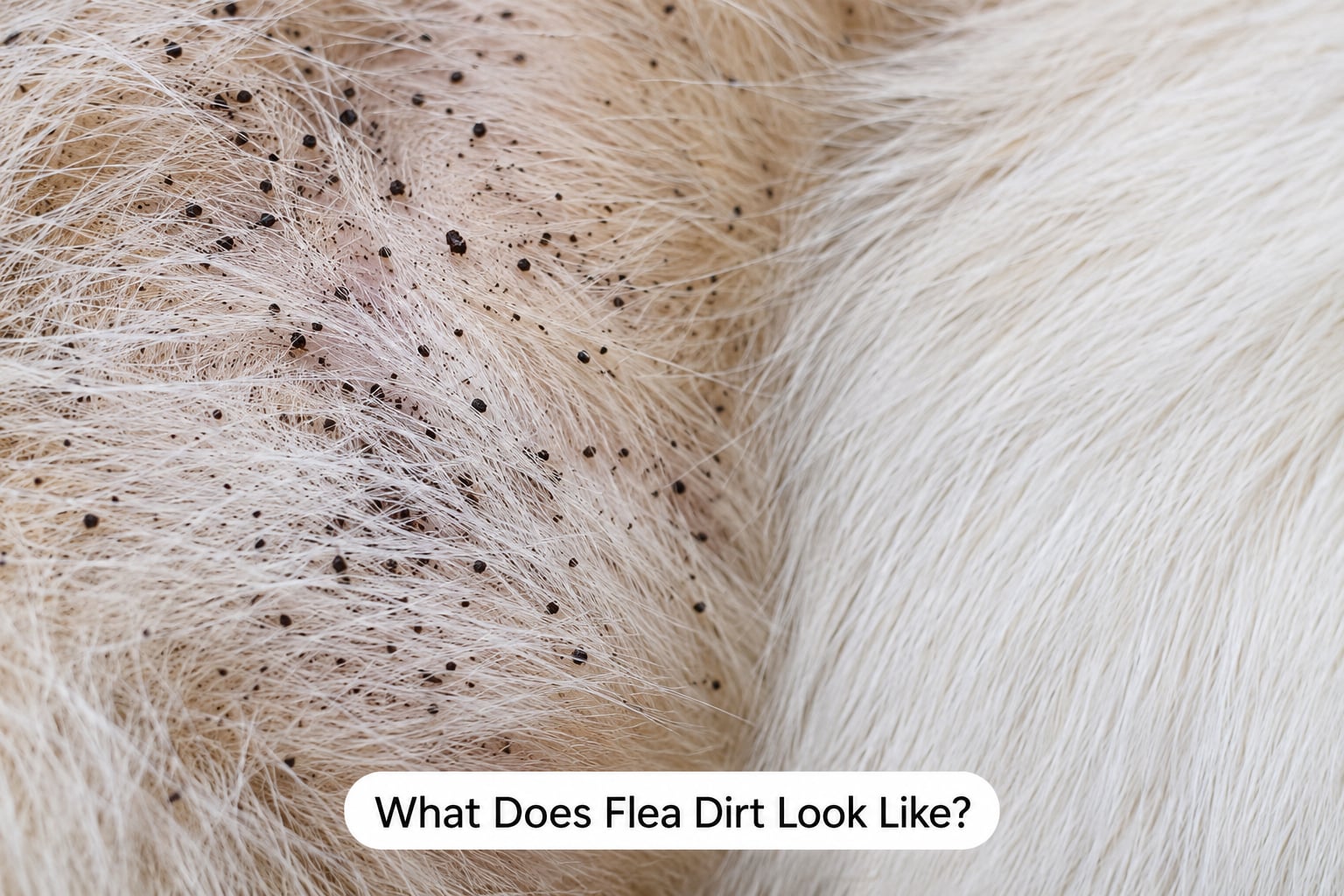
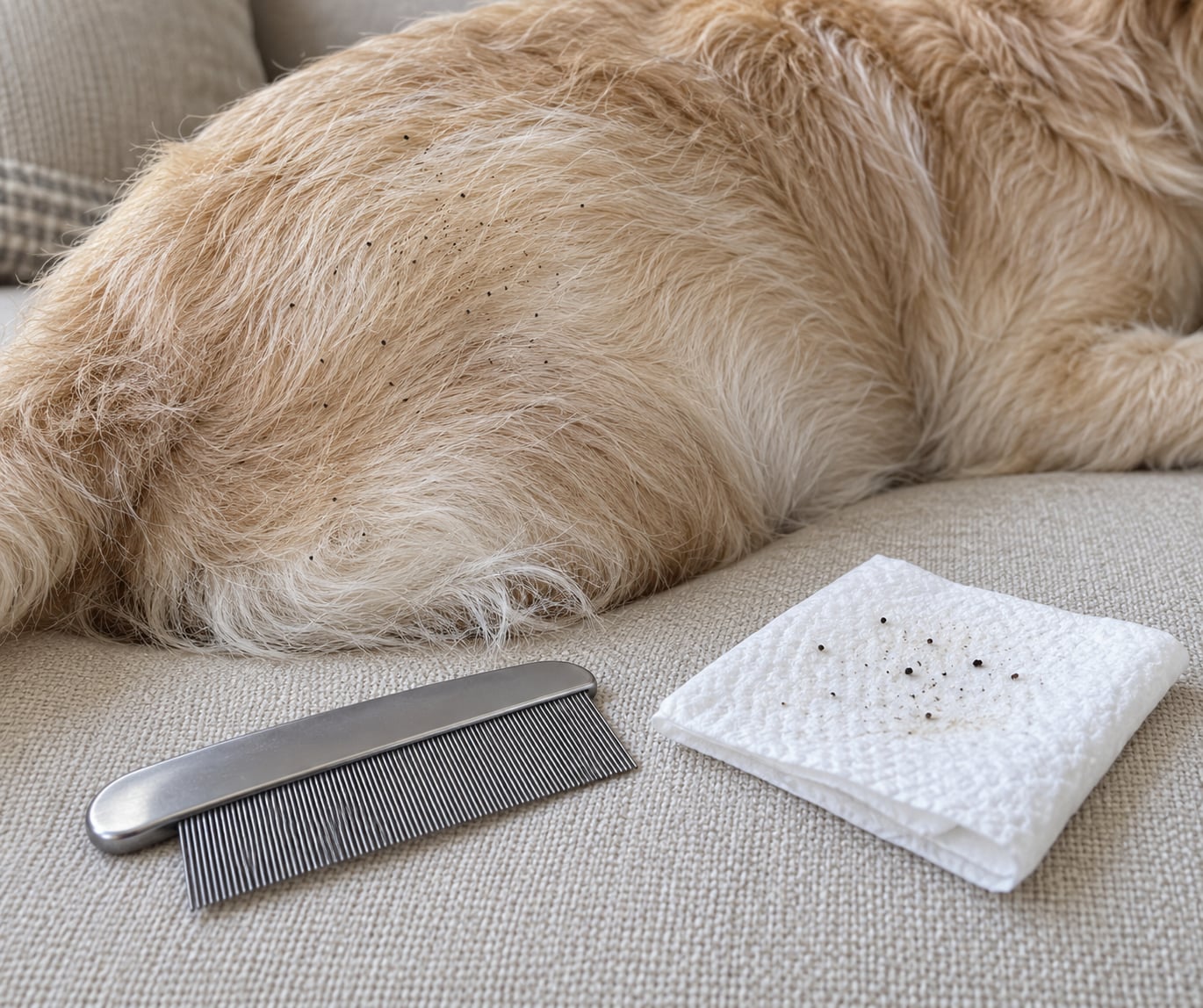
Flea dirt is the dried, digested-blood feces of adult fleas. An adult flea feeds on a host animal several times a day, and what comes out later is dark, granular and about the size of a pinhead. On a light or white coat it reads as scattered coarse black pepper.
The useful details are size, color, texture and location. Size: roughly half a millimeter to a millimeter across, similar to a grain of coarse sand or a fleck of ground pepper. Color: black to very dark reddish-brown, and it may look faintly rusty on a white surface. Texture: dry, crumbly, and it smears rather than dissolving when wet. Location: wherever your pet sits, sleeps or rests, so the lower back, tail base, ruff, rump and the favorite couch cushion come first.
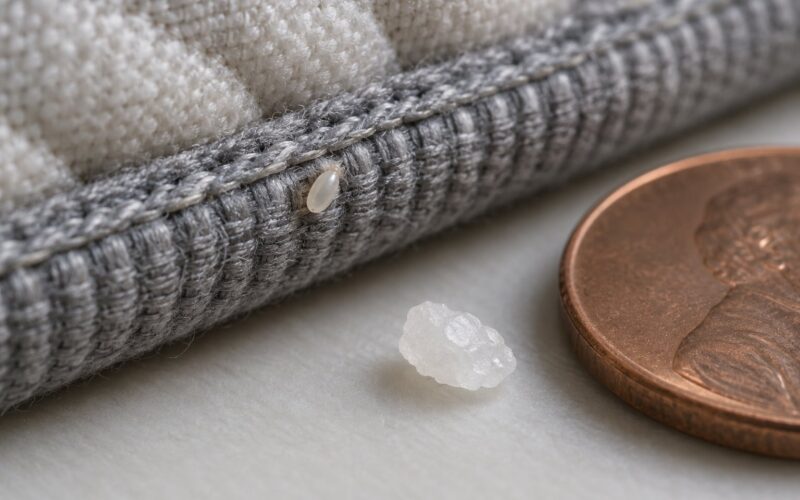
One distinction matters early. Flea dirt is not a flea egg. Eggs are pale, oval, sticky and about the size of a grain of salt. If what you swept up is white and smooth rather than black and gritty, you are looking at a different life stage.
Flea dirt is also not dried blood from a scratch, though the wet test can make the two look similar. A flea’s droppings are partly host blood, which is exactly why water brings the color back out. Dried blood from a grooming scratch tends to sit on one spot, often on a scab, rather than scatter across a coat and a cushion in the same pattern.
How to Tell Flea Dirt Apart from Ordinary Dirt
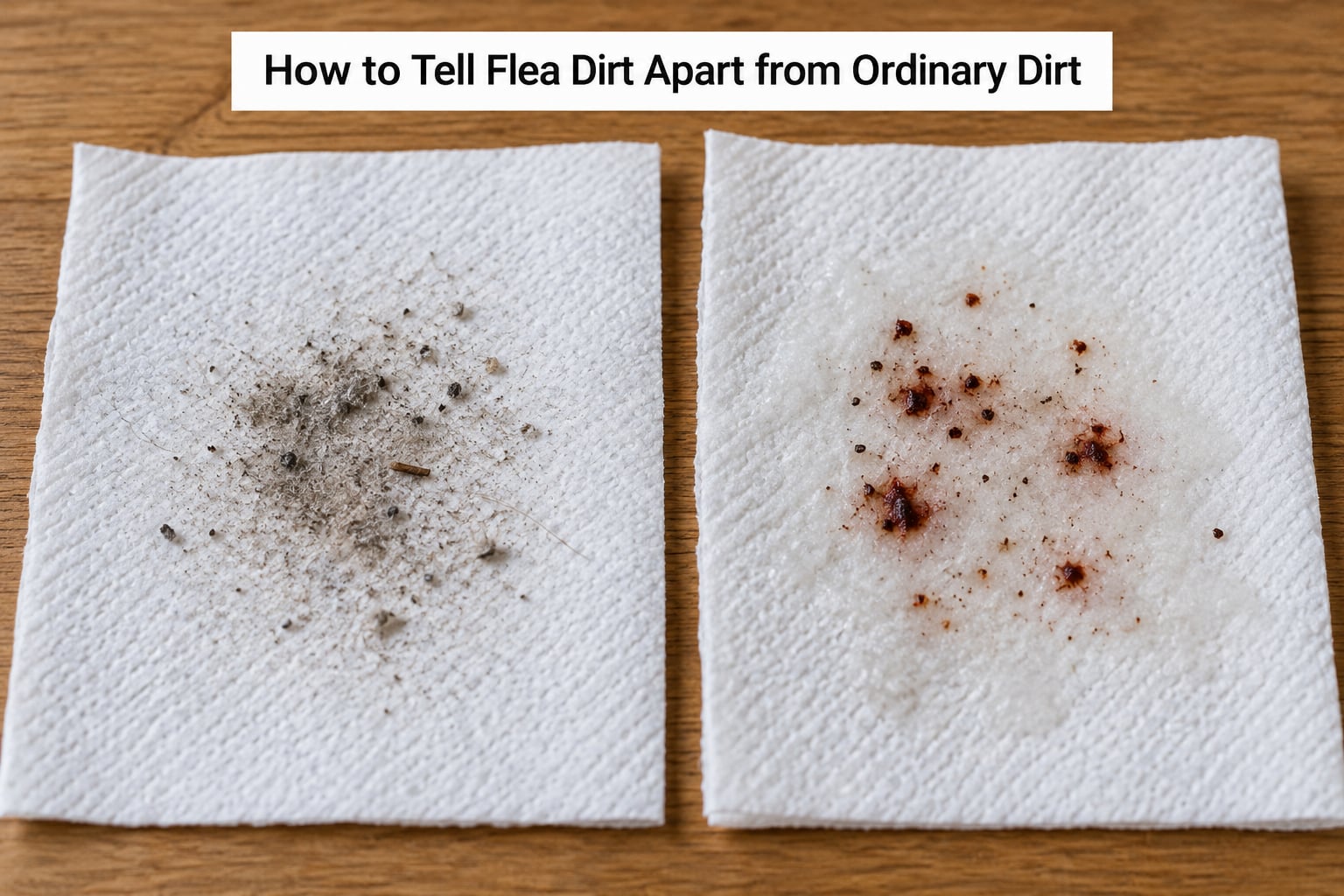
Two cues separate real flea dirt from every other black speck in the home: it dissolves and stains reddish-brown when wet, and it clusters where the pet spends time. Ordinary dirt stays gritty when dampened and washes off in plain water. Flea droppings smear into a rust-colored halo because the hemoglobin is still there, just waiting for water to release it.
Here is a side-by-side comparison of the most common lookalikes:
| What you find | Color and size | Texture | Wet test result | Where it turns up |
|---|---|---|---|---|
| Flea dirt (flea feces) | Black to dark reddish-brown, under a millimeter | Dry, crumbly, smears easily | Reddish-brown halo after 5 to 10 minutes | Pet’s lower back and tail base, pet bed, favorite cushion, carpet underneath |
| Ordinary dirt and soil | Brown to black, irregular size | Gritty, holds its shape when wet | Darker muddy smudge, no red halo | Paws, lower legs, any outdoor surface |
| Lint and carpet fiber | Off-white, gray or beige | Fibrous, bends, floats | Wet, flat, no color change | Couch gaps, carpet edges, upholstery seams |
| Coffee grounds or black pepper | Dark brown or black, uniform | Coarse and angular | Leaches brown, no halo | Kitchen and dining areas, spills |
| Dried pet food or crumbs | Varies, often mid-brown | Flaky or powdery | Softens into paste | Couch cracks, floor near the food bowl |
| Dried blood from a scratch | Dark red-brown | Thin film attached to hair or a scab | Reddish smear, same as flea dirt | One localized spot, usually on skin or a paw |
| Flea eggs | Pale white to cream | Smooth, oval, sticky | No red halo, stays intact | Fur, bedding, carpet, cracks and crevices |
| Flea larvae | Tan to pale, worm-like | Legless, moving, avoids light | No halo | Deep in carpet, upholstery seams, under furniture |
The dried-blood row is the one that confuses people, because the wet test behaves the same way. That is why location matters so much. Flea dirt shows up in quantity, in a pattern that matches where the pet rests, and it keeps appearing on a fresh towel the next day. A single spot of old blood near a scratch does not.
Flea Dirt Identification on Pets and Furniture: A Practical Checklist
Run through this list in order when you suspect something. It takes ten minutes and covers both animals and furniture.
- Part the coat at the tail base. Look for black grit sitting on the skin and along the hair shafts, not just on the surface.
- Check the lower back, rump and ruff. These are the areas with thin hair and heavy flea activity, so the specks show clearly against skin.
- Look at the armpits, groin and belly. Fleas move where the body presses against itself.
- Inspect the pet bed and blanket. Lift the cover and check the seams and any fold where the fabric touches the floor.
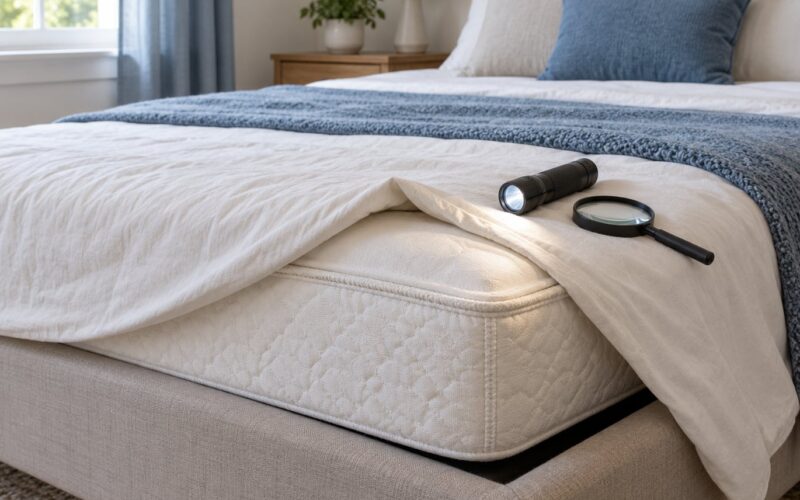
- Open the couch cushions. Run a finger along the piping and inside the gaps; flea dirt and eggs fall there.
- Check under the pet’s usual seat. Carpet directly beneath a favorite chair window collects the most droppings in the house.
- Sweep the baseboards and under low furniture. Flea larvae avoid light and settle in cracks and undisturbed edges.
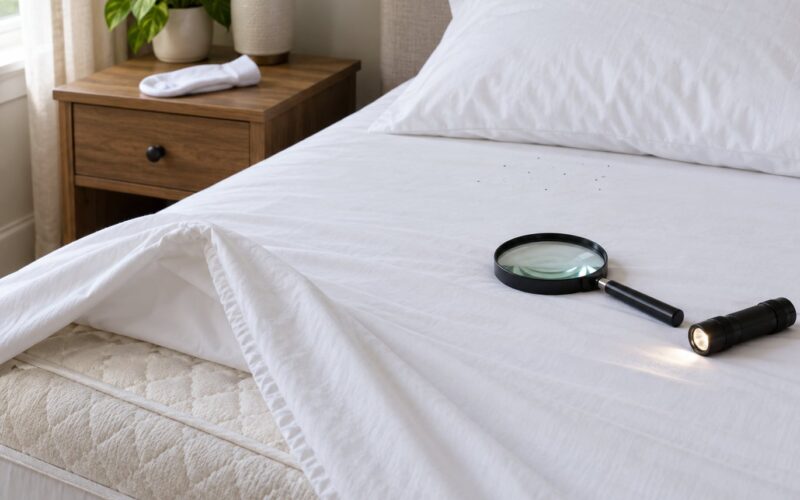
- Shake out a white sheet over the tub or a pale towel on the floor. Specks that fall from cushions are much easier to see against white.
Where to Look for Flea Dirt on Pets and Furniture
On a pet, concentration tells the story. Fleas prefer warm, sheltered, thin-skinned areas, so the first places to check are the tail base, the lower back just above the hips, the rump, the neck and ruff, behind the ears, the armpits and the belly. The back of the head and neck are also good, since many animals scratch there first when fleas bite. Check every pet in the home. Not every animal reacts to bites, so a calm cat can be carrying fleas while the dog next to it is itching constantly.
In the home, think about where the pet sits rather than where fleas hide. Fleas spend most of their time off the animal, resting on fabric, so the highest-yield spots are pet beds, couch cushions the pet claims, area rugs, carpet under furniture, baseboard edges, cat trees and scratching posts. Owners on pet forums keep reporting the same pattern: black specks concentrated on the couch cushion, the dog bed, and the carpet directly beneath the pet’s favorite resting place.
One more location surprises people. White bedding and light-colored pants show specks sooner than the pet itself does, because the contrast is stronger. If you sit down on the couch and come away with a light dusting of black grit on your leggings, that is a useful clue worth following up on.
How to Confirm a Flea Infestation
The wet paper towel test is the most reliable thing you can do at home, and almost every published version skips the one step that matters most.
- Comb the pet with a fine-toothed flea comb. Start at the neck, then the tail base, rump, behind the ears and armpits. Hold a white paper towel underneath as you stroke downward so falling material lands on it.
- Break up any clumps. Flea dirt sticks to the coat; a little water or a second pass with the comb’s teeth separates the specks.
- Dampen the towel with plain water. It should be wet, not dripping. A spray bottle or a fingertip works fine.
- Wait 5 to 10 minutes, then look. Flea dirt dissolves and leaves a reddish-brown or rust-colored halo spreading outward from each speck. Nothing visible happens to ordinary dirt.
That wait time is the detail most guides leave out, and it is why so many owners think the test failed. If you check after ten seconds you will see a dark speck and conclude nothing. Give it the full wait.
The combing matters too, because it separates the flea feces from loose environmental grit that happens to be lying on the coat. Wear white socks for a second pass. Walking across carpet in light-colored socks shows you the traffic pattern without any equipment, which is the quickest check in this whole guide.
Two more signals help. Live fleas are fast, dark, and side-on flattened; they move in short sprints through the fur rather than flying or crawling slowly. Look for twitching skin on the back, scratching that focuses on the neck and tail base, and clusters of small raised welts on the legs and belly. On people, bites tend to show up on ankles and lower legs, often in a line.
A clean towel is not proof there are no fleas. Several things can produce a false negative: a light infestation where the pet grooms off the droppings before you see them, cats cleaning themselves obsessively, and most importantly the pupal stage. Pupae are wrapped in a cocoon that resists both sprays and indoor treatments, and when a new adult emerges days later the fleas start laying droppings again. This is why owners keep finding new specks a week or two after treatment and assume the product failed, when the environment was still hosting the population all along.
Counting helps more than people expect. Pick one spot, the couch cushion or the dog bed, wipe it clean, mark the date, and count fresh specks the next day. Repeat weekly. A number trending down tells you something is working even when individual sightings still look alarming.
What Causes Flea Dirt on Furniture?
Adult fleas are obligate parasites, which means they need to feed on a warm-blooded host to reproduce. A female flea feeds repeatedly, digests what she takes, and passes it within hours. The droppings land on the host’s coat first, then slide off or fall wherever the host has been lying.
The key point is the split. Only a small fraction of the flea life cycle lives on the animal, and the rest develops in the environment. Where each stage spends its time explains why furniture must be inspected every time.
| Stage | Appearance | Where it lives | How likely you are to spot it |
|---|---|---|---|
| Egg | White to cream, oval, sticky, about 0.5 mm | Fur, bedding, carpet, upholstery seams | Hard, since they blend into pale fabric |
| Larva | Tan, worm-like, legless, 2 to 5 mm | Deep in carpet, under furniture, cracks | Rarely, they avoid light and stay hidden |
| Pupa | Encased in a silken cocoon, brownish | Settled in the same protected spots | Very rare, and resistant to treatment |
| Adult flea | 2 to 3 mm, wingless, reddish-brown, side-flattened, bristled | On the host and in bedding and cushions | Most visible stage, though they are fast |
That table is the reason treating the pet alone tends to disappoint people. Adults on the animal are the portion you can reach with a treatment. The eggs, larvae and pupae in your furniture and carpet are the reservoir that repopulates the pet, and indoor-only measures at the pet plus chemical spraying without a plan for the couch, carpet and pet bed is a common route to the same result six weeks later.
Flea dirt does not always mean you have a pet. In homes without animals, fleas can arrive on secondhand furniture, in boxes or bedding brought in from storage, or via rodent hosts living in wall voids, attics or a neighboring unit in an apartment building. Wild hosts such as squirrels, opossums and stray cats can carry fleas indoors too. If you find the specks in a home with no pets, the pet bed and the quiet rooms become the first places to check, along with any sign of rodent activity nearby.
How to Remove Flea Dirt from Furniture and Pet Areas
Start with the pet and the environment in the same week rather than cleaning first and treating later. Removing residue without breaking the cycle means the droppings simply come back.
- Remove pet bedding and fabric items. Wash them on the care label setting and dry them fully. Heat plus a wash cycle removes eggs and larvae from bedding better than any spray.
- Vacuum thoroughly and often. Use a vacuum with a crevice tool or a hose attachment, working slowly along cushion seams, cushion gaps, sofa skirts, carpet edges, baseboards and under furniture. Move the vacuum in one direction so larvae are not pushed ahead of the suction.
- Empty the bag or canister outside immediately and seal the contents in a bag before it goes in the trash, since live larvae can survive inside a vacuum.
- Repeat vacuuming every two or three days for a couple of weeks, since new droppings appear daily while fleas are still active.
- Clean the pet bed cover and any washable cushion covers on the same schedule, not just once at the start.
A few things to avoid. Do not use boiling water on upholstery or carpet, since heat can set protein residue and shrink or distort fabric. Do not mix cleaning products, and do not apply any household insecticide, essential oil, dish soap or homemade mixture to your pet or to fabric your pet lies on without checking with a veterinarian first. Keep children and animals out of a treated room until the label’s drying and re-entry time has passed, which is stated on the product itself.
How to Prevent Fleas from Coming Back
Prevention is where most of the real work sits. Talk to your veterinarian about a product matched to your pet’s species, age, weight and health, and stay on schedule year-round rather than only in warm months. Many pets pick up fleas in the cooler months on other animals, and a lapse in coverage is when counts spike again. Your vet can also tell you which options make sense if you already have a household product in mind.
Treat the whole household consistently, including pets that never go outside, since fleas move between animals easily. Coordinate indoor measures with whatever product you choose, following the label timing so you do not reduce the effectiveness of either the pet treatment or the environment treatment.
Keep vacuuming on a schedule even after the specks are gone, and keep checking the favorite cushion and pet bed every week or two. That habit catches a new introduction long before the dog starts scratching.
One hard rule: never use human flea or tick medication on a dog or cat. Several human products contain ingredients that are dangerous to pets, and permethrin, found in some outdoor flea products, is toxic to cats when it gets on fur and is licked off. Read labels, and ask your vet before applying anything from the house to a pet.
When to Contact a Veterinarian
Book an appointment rather than treating at home if your pet is scratching hard enough to break the skin, or if you notice hair loss, thinning fur along the spine, red irritated skin, hot spots, open sores or scabs, especially around the tail base and rump. Flea allergy dermatitis often shows up as a narrow strip of irritated skin along the back and the base of the tail.
Get same-day advice for pale gums, gums that look white or bluish, weakness, lethargy, reduced appetite or rapid breathing, since heavy infestations in young, small or elderly animals can cause blood loss. Also raise tapeworm segments with your vet, as tapeworms are spread by fleas carrying the parasite internally.
Persistent scratching with no skin changes, or specks that keep reappearing several weeks after treatment, is worth a visit too. It may point to a different parasite, an allergy, or an environmental source you are not seeing. Your vet can rule out lice, mites and skin conditions that get lumped in with the same symptoms, and a clean skin scrape is faster than guessing.
Frequently Asked Questions
Is flea dirt the same as flea eggs?
No. Flea dirt is the digested-blood feces of an adult flea, black or dark brown, dry and crumbly, and smaller than a pinhead. Flea eggs are pale white to cream, smooth, oval and sticky, closer to the size of a grain of salt. The wet paper towel test settles it: flea dirt dissolves into a reddish-brown halo, while an egg stays intact.
Can flea dirt be found on furniture without fleas present?
Yes. Droppings can remain long after the fleas that left them moved or died, which is why an empty-looking home can still show heavy residue. Fleas also arrive without pets, carried in on secondhand furniture, storage boxes or bedding, or by rodent hosts living in wall voids or a neighboring apartment. Finding specks with no pets in the home still points to inspecting the upholstery and any nearby rodent activity.
Does a wet-paper test always confirm flea dirt?
No, it can produce a false negative. Light infestations may leave few specks, grooming cats clean off the droppings, and a single comb pass may miss the tail base where fleas concentrate. The test also competes with old dried blood, which leaves a similar red smear. A clean towel means the sample you tested showed nothing, not that fleas are absent, so repeat the test in a few days with different areas.
Can you use human flea medicine on a dog or cat?
Never, and never without asking your veterinarian. Some human flea products contain ingredients that harm pets, and permethrin in certain outdoor flea preparations is toxic to cats if it gets on the coat and is groomed off. Product species, weight limits and age limits differ enough that guessing is risky. Tell your vet what you have found and let them match a product and dose to your pet.
How often should carpets and upholstery be vacuumed during a flea infestation?
Every two or three days for the first couple of weeks. Fleas keep laying eggs while they are active, so a single thorough pass removes the current larvae and droppings but not the next wave. Work slowly along cushion seams, cushion gaps, carpet edges, baseboards and under furniture, and empty the vacuum outside into a sealed bag each time, since larvae can survive inside the bag.
How soon after treatment should fleas disappear from a home?
Expect visible improvement within a few days, with new adults dying off over one to two weeks and the environment settling over three to four weeks. Flea dirt itself lingers because it is residue, so specks can stay visible after live fleas are gone. Because pupae resist treatment, newly emerged fleas can appear around week two or three. Wipe a fixed area clean, count fresh specks weekly, and treat that pattern as your real measure of progress.
Conclusion
Start with the places your pet uses most: tail base, lower back, pet bed, favorite cushion, carpet underneath. Sweep the specks onto a white paper towel, dampen it, and give it the full five to ten minutes before you decide, because that wait is where most tests get misread. Once the reddish-brown halo shows up, treat the pet and the environment in the same stretch of time, vacuum every two or three days, and check back with a counted, dated spot to see whether the numbers actually drop.