To vacuum for fleas correctly, use a strong vacuum with a crevice tool, make slow overlapping passes over every carpet, rug, sofa seam and baseboard, then seal the contents and take them outside right away. A thorough session on one carpeted bedroom takes roughly 20 to 30 minutes. Fleas are only the visible tip of the problem: about 95% of a flea population lives in the environment as eggs, larvae and pupae, not on your pet.
That is why vacuuming is the first thing to do and the thing most people do badly. Rush the passes, use the floor head everywhere, leave the bag sitting in the hallway, and you have moved the infestation around instead of removing it.
This guide covers the whole routine: preparation, attachments, technique, safe disposal, and what to do in the days and weeks after. Nothing here requires products beyond a decent vacuum. Anything applied to your pet should go through your veterinarian first.
Table of Contents
- What You Need
- How to Vacuum for Fleas Correctly: Step-by-Step
- Common Mistakes
- Frequently Asked Questions
- How often should I vacuum if my home has fleas?
- Can vacuuming alone get rid of a flea infestation?
- What vacuum attachment is best for removing fleas?
- Where should I put the vacuum bag or contents after cleaning?
- Should I vacuum furniture and pet bedding too?
- How do I know whether a flea problem needs professional treatment?
- Conclusion
What You Need
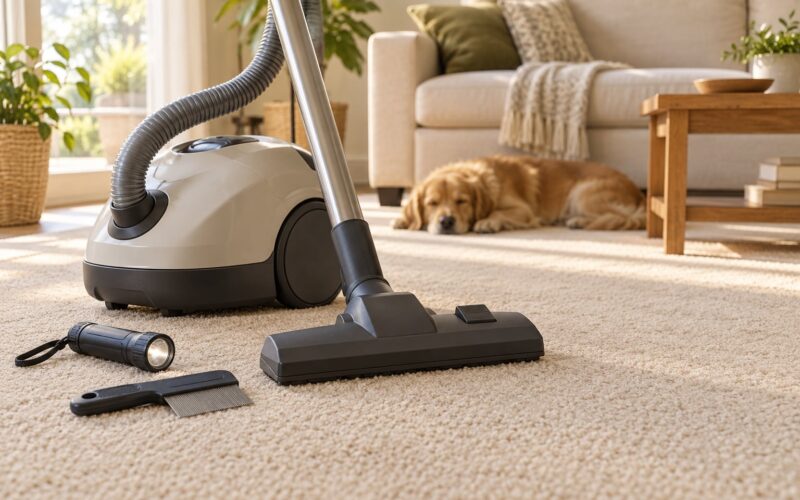
A flea vacuum session needs very little: a vacuum with real suction, the right attachment, and a way to get the contents out of the house. Beyond that, a flashlight and a stiff brush make a measurable difference in how much you actually collect.
- A vacuum with strong suction. A bagged upright or canister with a hose is ideal. Bagless machines without a filter struggle with fine flea dirt and larvae.
- Crevice tool. For sofa seams, carpet edges, baseboards, stair edges and under furniture.
- Upholstery or hand tool. For cushions, pet beds and the gap between cushions and sofa arms.
- Floor head with a beater bar or agitator. For open carpeted areas. The rotating brush loosens fibers so hidden eggs and larvae drop out.
- Flashlight. Flea dirt looks like coarse ground pepper. Shining a light across carpet fibers and cushion seams shows where the population is concentrated.
- Stiff brush or plastic card. To lift carpet fibers and pull debris out of sofa seams before the vacuum pass.
- Disposable bags and a sealable container. For canister debris. Resealable trash bags work well.
- Flea comb. To check your pet and to test a cleaned area afterward.
- Pet-safe flea treatment. Vacuuming only works long term if the pet is treated. Ask your veterinarian which product fits your pet, and never double up on two products at once.
- Laundry bags and pet bedding. For washing covers, blankets and bedding on a hot cycle.
A steam cleaner helps as a follow-up on hard floors and tile, but it is a complement to vacuuming, not a replacement. Fleas move out of the way of heat instead of dying from a quick pass, so anything the steam misses stays in the carpet.
How to Vacuum for Fleas Correctly: Step-by-Step
1. Prepare the area before vacuuming
Move pets out of the room and pick up anything on the floor, including bedding, toys, rugs and laundry. Those items can hide adult fleas and they block the vacuum head from reaching carpet evenly.
Walk the room and note where the carpet is, where it meets baseboards, where the sofas and chairs sit and which spots your pet uses most. Fleas concentrate where animals rest, because that is where flea dirt and larvae accumulate.
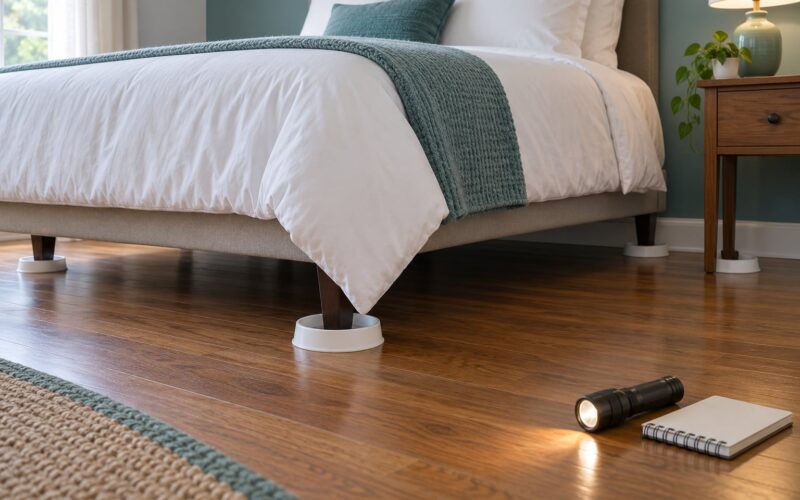
Then look closely. Run a flashlight along baseboards, under sofa overhangs, around the bed frame and inside cushion seams. Dark, sheltered spots tell you where to spend your time, so a five-minute inspection saves twenty minutes of guessing.
2. Choose the right vacuum attachment
The floor head is the wrong tool for most of the job. A crevice tool for edges and seams and an upholstery tool for furniture, used alongside the floor head, collect far more than the wide head alone.
- Crevice tool: baseboards, carpet edges, stair edges, sofa seams, the gap between cushions and the frame.
- Upholstery tool: sofa and chair surfaces, pet beds, mattress sides, car seats and footwells.
- Floor head with beater bar: open carpeted areas and area rugs.
- Hand tool: cushion seams and tight spots where the hose will not bend.
On carpet, run the beater bar. On upholstery, a slower brush setting avoids damaging fabric while still loosening dirt. If your vacuum has a hard floor setting, avoid it on carpet, since a lowered head and a spinning brush can pull and stretch fibers.
3. Vacuum for fleas correctly with slow, overlapping passes
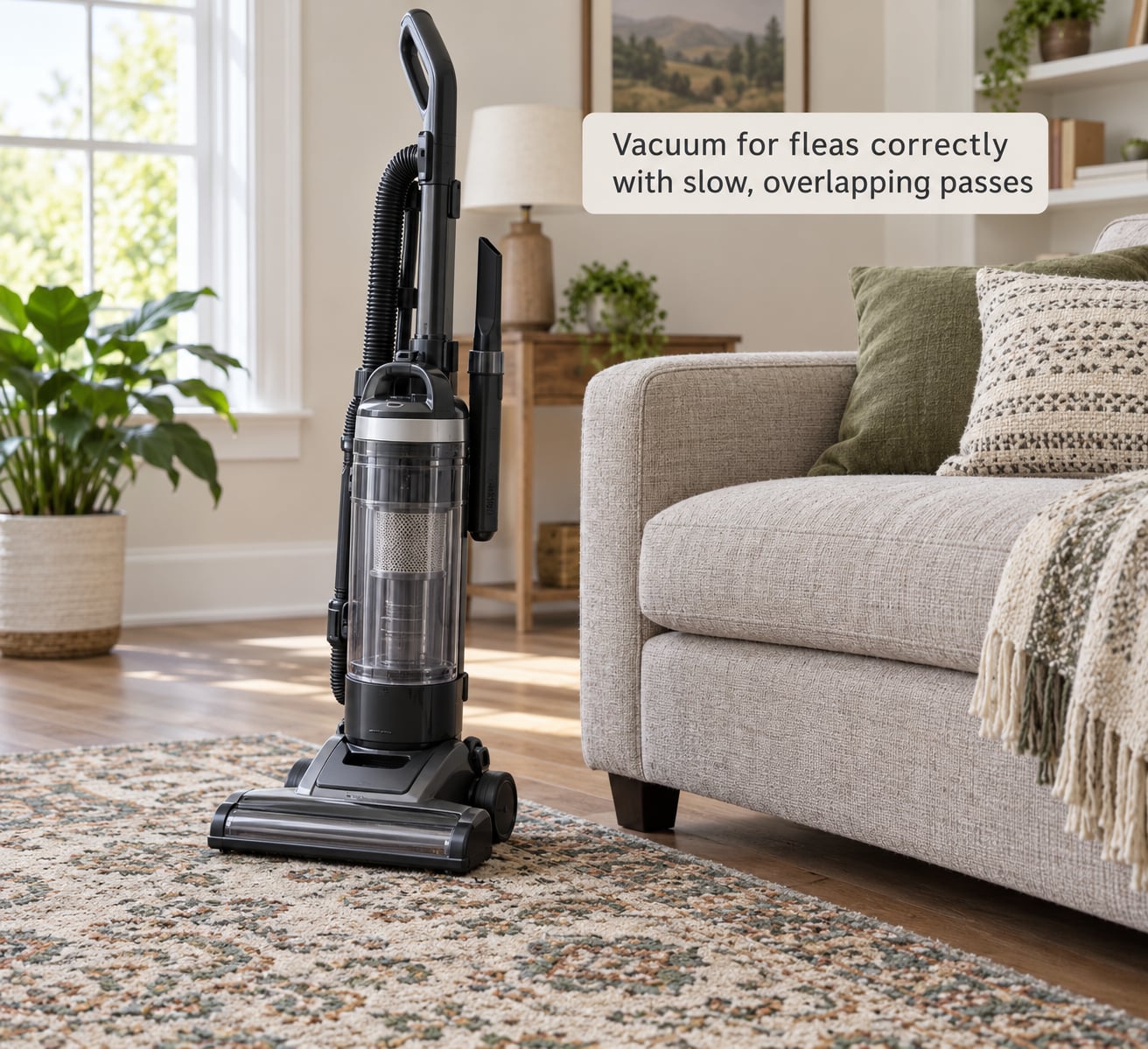
Slow, overlapping passes matter more than suction alone. A fast pass lifts mostly adult fleas and loose dirt, while a slow pass gives the airflow time to pull eggs and larvae out from deeper in the pile.
Work in this order:
- Pet areas first. Pet beds, the spot where the pet lies down, the door mat and any carpet with worn fibers.
- Edges and seams next. Baseboards, carpet edges, stair edges, sofa seams and the gap under cushions, using the crevice tool.
- Then the open floor. Overlap each pass by about a third of the head width so no strip is skipped.
- Under and behind furniture. Move lightweight pieces rather than vacuuming around them.
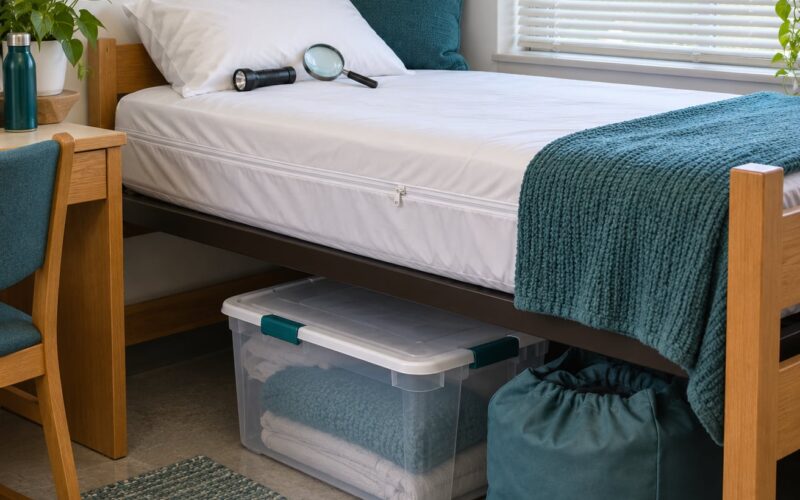
- Mattress, box spring and bed frame. Use the upholstery tool and check the frame edge, where adults hide.
- The car, if your pet rides in it. Seat seams, footwells, the trunk and the underside of the seat mat.
On carpet, go over the area once with the beater bar and then again with the crevice tool along the edges. Lift the pile with your hand or a stiff brush between passes if fibers are matted.
Expect the collected debris to look like pepper. That grit is flea dirt, partly digested blood, and it means fleas were feeding here even if you barely see live insects.
4. Empty and seal the vacuum contents immediately
Fleas are rarely killed by the vacuum itself. Adults may be injured, but eggs and larvae usually survive, so anything left in the bag or canister can hatch and re-infest the room. Seal the contents and take them out of the house in the same trip.
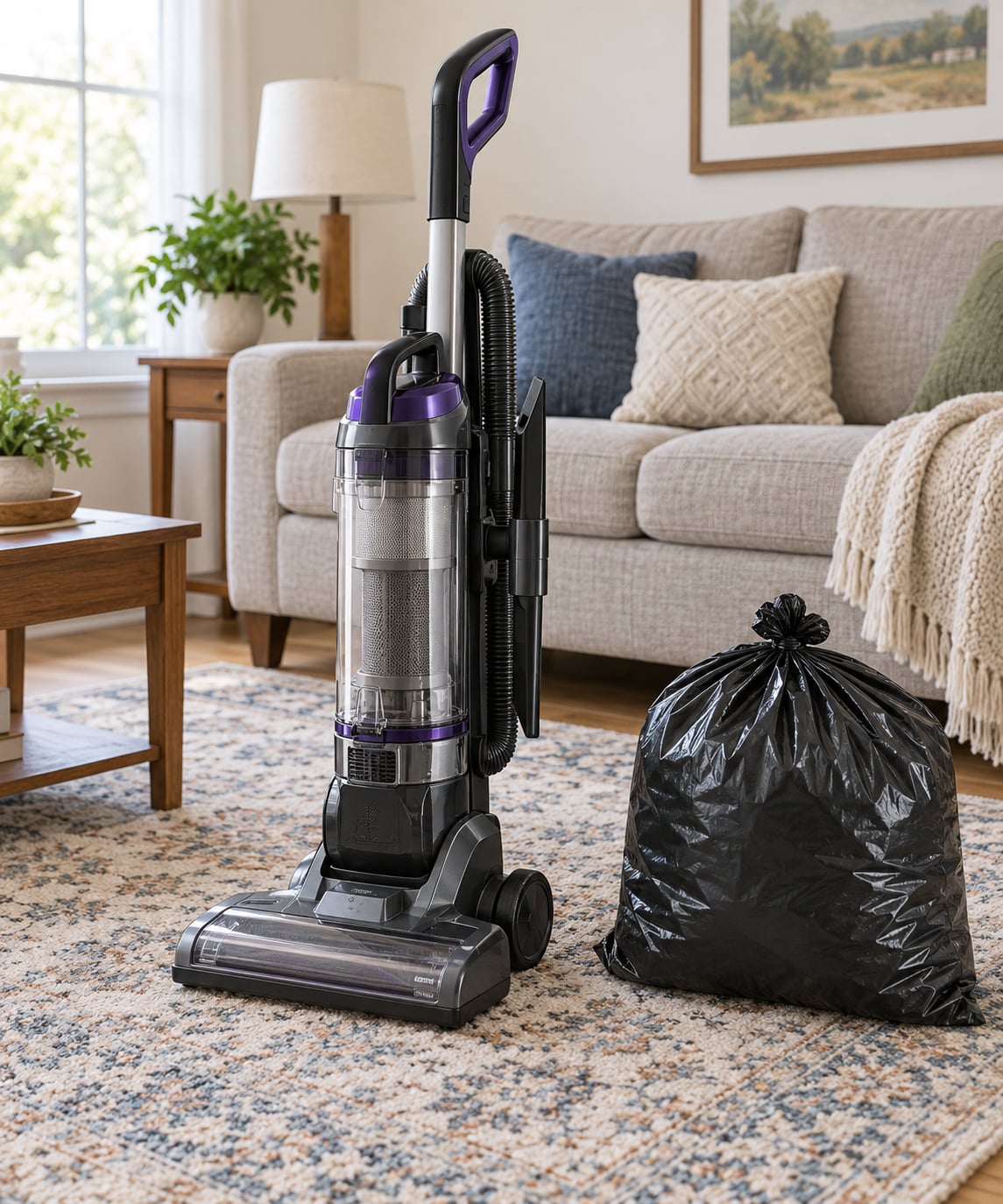
Bagged vacuums: Take the bag out of the machine, tie it shut tightly, then seal it inside a second plastic bag. Put it in an outdoor bin right away. If the bag is torn or the machine smells of fleas, swap it for a new one rather than reusing it.
Canister vacuums: Empty the canister outside if you can. Line the opening with a bag and shake the debris straight into it, or empty it into a container, add a little soapy water, seal the container and take it out. Do not hose the debris down a driveway or into a storm drain, since eggs and larvae can survive in the water and in sheltered cracks.
Wash or replace the filter if it was heavily clogged. A blocked filter drops suction, and a weak vacuum gives you the feeling of having cleaned without actually removing anything.
A trick that circulates on homeowner forums is dropping a cut flea collar or a mothball into the bag before sealing it. It can kill some of what you collected, but it relies on fumes reaching a sealed bag, and mothballs are toxic to pets and children. Sealing and removing the contents is the reliable part.
5. Repeat vacuuming and follow the full flea-control plan
Vacuum daily while fleas are active, then two or three times a week once the population drops. Daily vacuuming does two useful things: it removes fresh eggs and larvae, and it stimulates dormant pupae to hatch, so emerging adults land on a treated surface instead of an untreated one.
Expect to keep seeing fleas for one to three weeks after you start. Flea development from egg to adult runs roughly 18 to 26 days depending on temperature and humidity, and the pupal stage can hold for a while before hatching. That rebound is normal, not a sign that the vacuuming failed.
| Zone | Attachment | Technique | Frequency |
|---|---|---|---|
| Pet beds and resting spots | Upholstery tool | Slow passes, lift pile between passes | Daily |
| Carpet edges and baseboards | Crevice tool | One slow pass, overlap at corners | Daily |
| Sofa and chair seams | Crevice tool | Scrape with stiff brush first | Daily |
| Open carpeted floor | Floor head with beater bar | Overlapping passes, half speed | Daily |
| Mattress and bed frame | Upholstery tool | Check frame edge and headboard | Daily |
| Car interior and trunk | Crevice and hand tool | Seat seams and footwells first | Every few days |
| Deck or covered pet run | Outdoor-rated vac or rake | Damp shaded soil under furniture | Weekly |
The rest of the plan matters as much as the vacuum. Keep your pet on a veterinarian-recommended treatment for the whole period, since an untreated pet walks fleas straight back in. Wash pet bedding, blankets and your own sheets on a hot cycle and dry them fully, then bag the laundry until the wash is done. Seal cracks around baseboards and door thresholds where fleas travel between rooms.
Vacuum first, then apply a residual spray or an insect growth regulator, and follow the label on how long to wait. Most residual products need an undisturbed surface, so avoid mopping or steam cleaning the carpet for roughly a week afterwards, since you can wipe the treatment away and restart the cycle. Vacuuming after a spray is fine once the product has dried.
Call a pest professional if fleas are still visible after two to three weeks of daily vacuuming plus a consistent pet treatment, if you see them in rooms where your pet never goes, if bites keep appearing in family members, or if the problem returns within a few weeks every time. Persistent indoor fleas usually point to an untreated pet, an untreated neighboring unit or an outdoor flea population near a shaded, damp area.
Common Mistakes
Rushing the passes. Fast strokes remove adults and visible dirt but leave most eggs and larvae in the pile. Slow down to about half your normal speed.
Using only the floor head. A wide head cannot reach sofa seams, carpet edges or baseboards, which is where a large share of the population sits. Change attachments at every zone.
Skipping under furniture. Pull out anything that moves. Fleas use undisturbed, shaded areas as their pupal habitat.
Leaving the bag in the hallway. An open or loosely tied bag is a nursery. Seal it inside a second bag and take it to an outdoor bin the same day.
Assuming every flea is visible. Adults are a small share of the population. Judge progress by flea dirt on a white cloth after combing or after vacuuming, not by how many bugs you can see hopping.
Treating the vacuum as the treatment. Vacuuming removes a large share of the population and makes chemical work better, but it does not reach fleas on your pet, in deep cracks, or in an outdoor area feeding new arrivals. Pair it with pet treatment and follow-up steps.
Mopping right after residual spray. Cleaning the carpet in the first week after treatment can remove the product you just paid for in time. Hold off and follow the label.
Doing one session and stopping. A single thorough vacuum is a reset, not a fix. Daily passes for two or three weeks are what break the cycle.
Frequently Asked Questions
How often should I vacuum if my home has fleas?
Vacuum daily while fleas are active, covering every carpeted room, rug, sofa seam and baseboard. Once you stop seeing new adults and the flea dirt test comes back clean, two or three passes a week will hold the line. Daily passes also stimulate dormant pupae to hatch onto treated surfaces, which is one of the main reasons the method works.
Can vacuuming alone get rid of a flea infestation?
No. Vacuuming removes a large share of the eggs, larvae and adults living in your carpet and furniture, but it does not touch fleas on your pet, fleas hiding in cracks, or new fleas arriving from outside. It works as the first step: it clears debris, exposes hidden stages to any later treatment, and makes pet treatment more effective.
What vacuum attachment is best for removing fleas?
A crevice tool for seams, carpet edges and baseboards, plus an upholstery tool for sofas, pet beds and mattresses, alongside a floor head with a beater bar for open carpet. The wide floor head alone misses the sheltered places fleas concentrate in. If you have only one attachment, buy or borrow a crevice tool and use it everywhere the floor head does not fit.
Where should I put the vacuum bag or contents after cleaning?
Seal it and take it outside. For a bagged vacuum, tie the bag inside the machine, then seal it inside a second plastic bag and place it in an outdoor bin. For a canister, empty the debris into a sealed container or bag, add a little soapy water, close it and bin it outside. Never rinse flea debris into a storm drain.
Should I vacuum furniture and pet bedding too?
Yes, and pet bedding comes first. Fleas spend most of their time on the animal and on whatever it lies on, so a pet bed can hold more debris than the carpet around it. Vacuum the bed, then wash the cover and bedding on a hot cycle and dry it fully. Sofas and cushions matter because adult fleas hop onto them and then back onto the pet.
How do I know whether a flea problem needs professional treatment?
Call a professional if fleas are still visible after two to three weeks of daily vacuuming plus consistent pet treatment, if bites keep appearing on family members, or if fleas show up in rooms the pet never enters. Other warning signs include fleas in the car or yard, a landlord situation in an apartment, and repeated reinfestation after every round of treatment.
Conclusion
Start tonight: move the pets, pick up the floor, and vacuum the affected rooms slowly with the crevice and upholstery tools, starting at the pet areas and edges and finishing across the open floor. Seal the bag or canister contents and take them to an outdoor bin the same night.
Then keep going. Daily vacuuming for two or three weeks, paired with pet treatment from your veterinarian and hot-washed bedding, is what breaks the life cycle. Seeing a few adults in the first couple of weeks is expected, not a setback.