Sand flea is a common name, not a species. It gets used for at least three different arthropods: ordinary cat fleas (Ctenocephalides felis) breeding in moist outdoor soil, chiggers (the larval stage of trombiculid mites), and the burrowing chigoe flea (Tunga penetrans) found in some tropical regions. The cat flea is one specific blood-sucking insect, and in North America it is the flea on most dogs and cats.
The reason the naming matters is practical. Pet flea treatments work on cat fleas and do nothing at all for chiggers. If you treat the wrong pest, the itching keeps going and your money is gone.
Table of Contents
- Sand Fleas vs Cat Fleas at a Glance: The Real Differences
- What People Mean by Sand Fleas
- Appearance and Size Differences
- Where You Are Likely to Find Each Pest
- Bites, Symptoms, and Infestation Signs
- How Each Pest Develops and Spreads
- Prevention and Treatment Differences
- Which Should You Choose?
- Frequently Asked Questions
- What to Do First
Sand Fleas vs Cat Fleas at a Glance: The Real Differences
The table below separates the five things people usually mean when they say sand flea. Note that the first two columns are the same species in different settings, which is where most of the confusion comes from.
| Criterion | Cat flea | Soil-breeding “sand flea” | Chigger | Chigoe (jigger) flea | Coastal sand hopper |
|---|---|---|---|---|---|
| Classification | Insect, order Siphonaptera | Same insect, living outdoors | Mite larva, family Trombiculidae | Insect, order Siphonaptera | Amphipod crustacean |
| Adult size | About 1/16 to 1/8 inch | Same, roughly 2 to 3 mm | Under 0.4 mm, barely visible | About 1/16 inch before it burrows | Up to about 1 inch |
| Color | Reddish brown to black | Reddish brown to black | Pale orange to reddens as it feeds | Pale grey to translucent | Translucent, shrimp-like |
| Primary habitat | Carpet, upholstery, pet bedding | Shaded, moist soil under decks and grass | Field vegetation and leaf litter | Sandy soil and bare feet | Beach wrack and wet sand |
| Lives on a host | Yes, cats, dogs, rodents, people | No, stays in soil | No, attaches briefly then drops off | Embeds in the skin of the foot | No, stays in the surf line |
| Bite location | Ankles, lower legs, waistline | Ankles and lower legs when you sit outdoors | Tight clothing lines, sock tops, waistband | Anywhere, usually feet and ankles | Does not bite people |
| Feeding time | Quick hop, then minutes to hours | Quick hop, then minutes to hours | Attaches for several hours, feeds once as a larva | Feeds continuously while embedded | Scavenges detritus |
| Peak season in the US | Warm months, indoors year-round | Warm, humid months | Late spring through early fall | Year-round in endemic tropics | Any time at the beach |
| Main health concern | Flea allergy dermatitis, tapeworm, flea-borne typhus | Same as cat flea | Intense local itch, sometimes fever if many bites | Tungiasis, a painful embedded infestation | None, it does not bite |
| Do pet flea products work | Yes | Yes, with premises treatment | No | No, needs medical removal | Not applicable |
What People Mean by Sand Fleas
In everyday US outdoor usage, the phrase almost always describes chiggers, also called red bugs, harvest mites, or jigger mites. Those are the larval stage of trombiculid mites, and they are the pest behind most itchy waistband welts after a hike, a lawn visit, or a weekend in the woods. People call them sand fleas because they are tiny, reddish, and turn up in sandy or grassy areas.
They are not fleas at all. A chigger is a mite with eight legs as an adult, no jumping ability, and a habit of attaching to thin skin where skin meets clothing. The larval stage is the only one that bites.
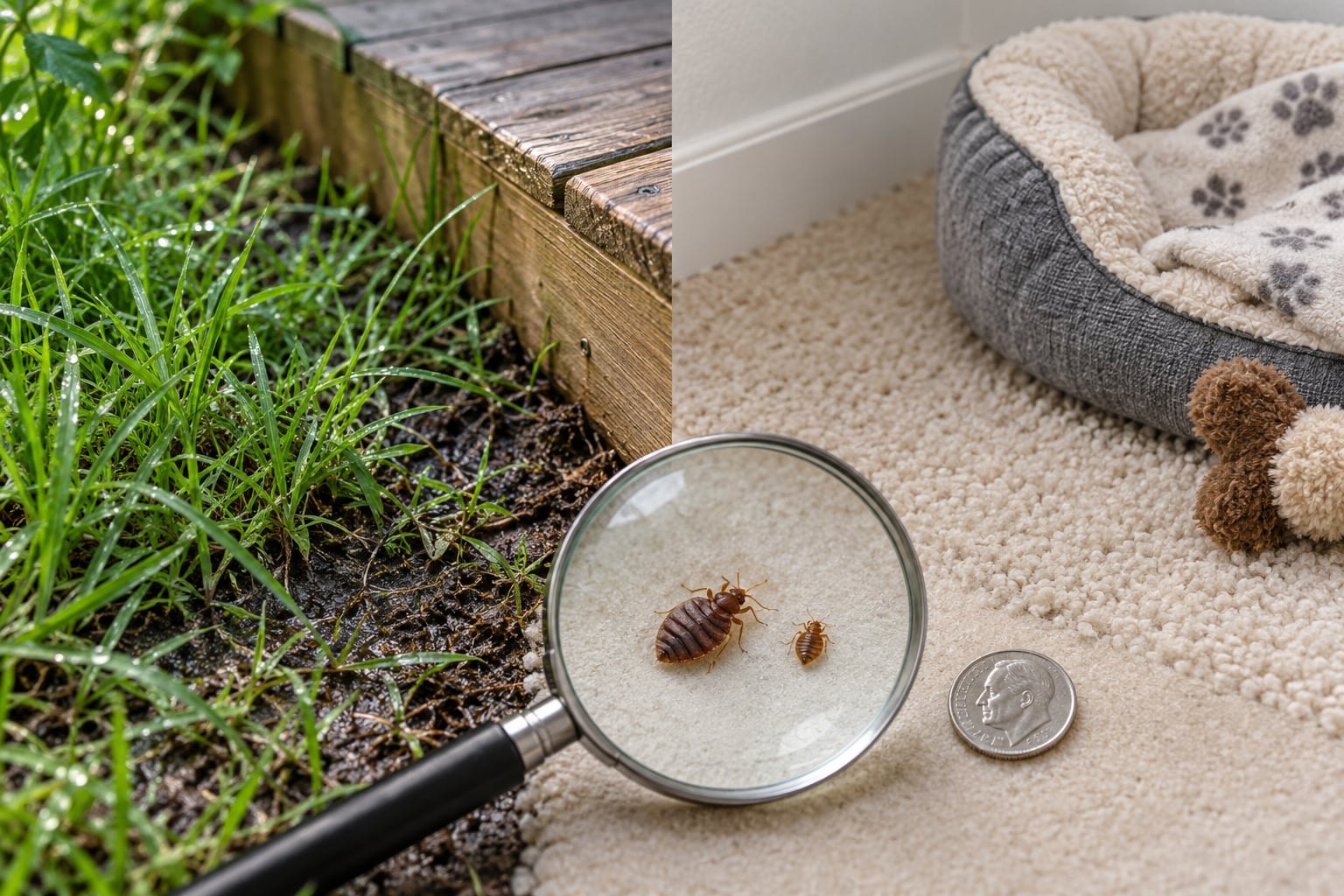
A second common meaning is the cat flea breeding in outdoor soil. Extension services describe these as sand fleas because the adults live and breed in dirt under decks, in shaded grass, and around animal kennels rather than on the animal itself. Same species as the indoor cat flea, different address.
A third meaning is the chigoe flea, also called the jigger flea or sand flea in the Caribbean, West Africa, and parts of South America. Tunga penetrans is a tiny flea that burrows into the skin, usually of the foot, and stays there for days while it feeds. The resulting condition is tungiasis, and it needs medical care.
And at the beach, the thing people photograph hopping in the wet sand is usually a sand hopper, a shrimp-like amphipod crustacean. It does not bite, does not feed on blood, and has nothing to do with fleas.
Appearance and Size Differences
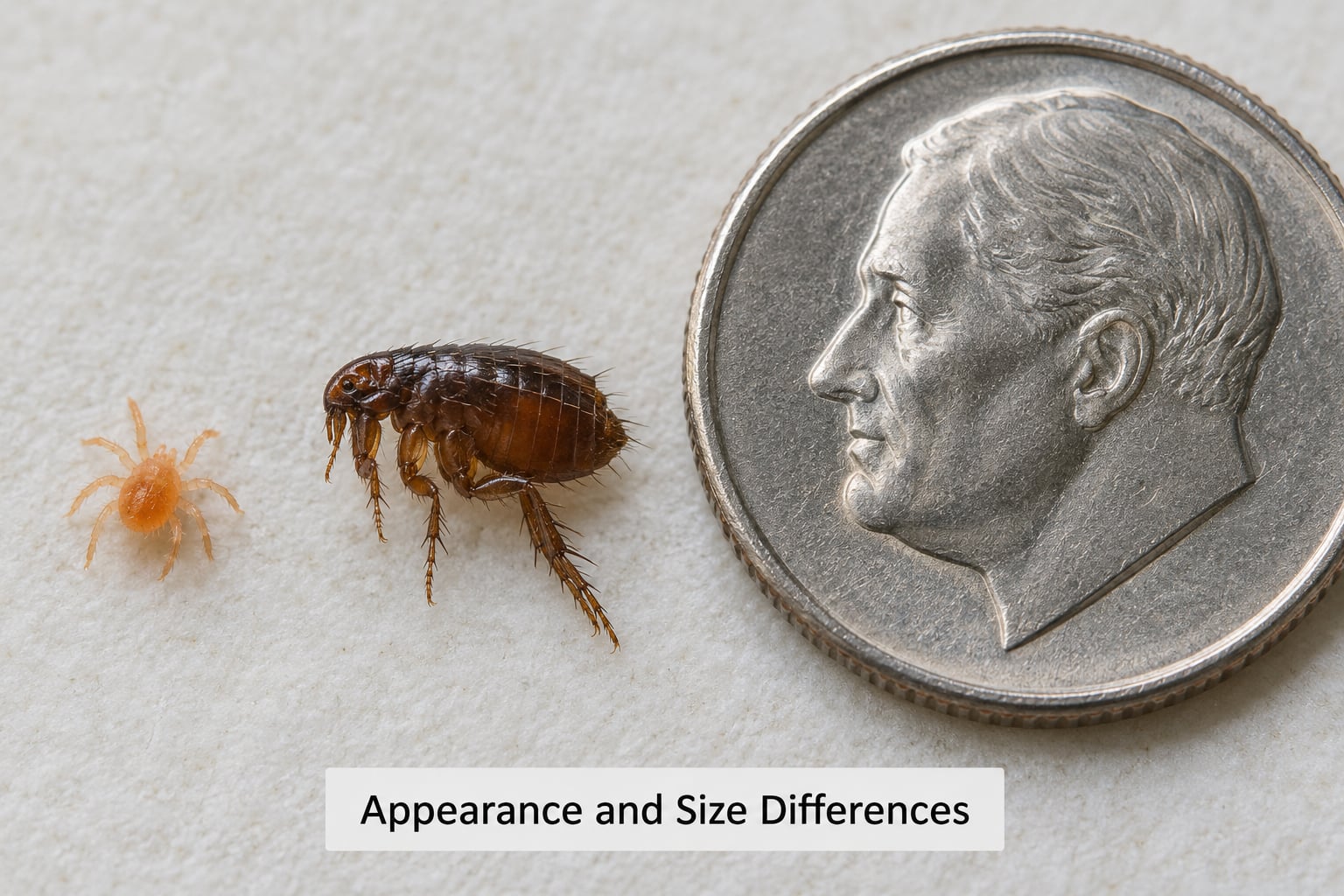
A cat flea adult is about 1/16 to 1/8 inch long, dark reddish brown, wingless, and hard-bodied. Viewed from above it looks narrow and slightly oval. Viewed from the side you see the flattened, laterally compressed body, the small head, and the oversized hind legs that make the jump possible.
A chigger larva is under half a millimeter. You cannot see it without magnification, and it looks like a pale orange or reddish dot at best. It has a rounded body and six legs in the larval stage. Many people report seeing the mite only after the reaction starts, and even then it has usually dropped off.
The size gap is why the two get blended together in memory. Both are tiny, both are reddish, both are found outdoors in warm weather. Under magnification they could not be mistaken for each other.
Cat flea eggs are pearly white ovals roughly half a millimeter long, about the size of a grain of salt, which is where part of the naming confusion starts. Flea larvae look like pale straw-colored worms a few millimeters long, and flea pupae sit inside a sticky silk cocoon that makes them hard to kill with spray.
Where You Are Likely to Find Each Pest
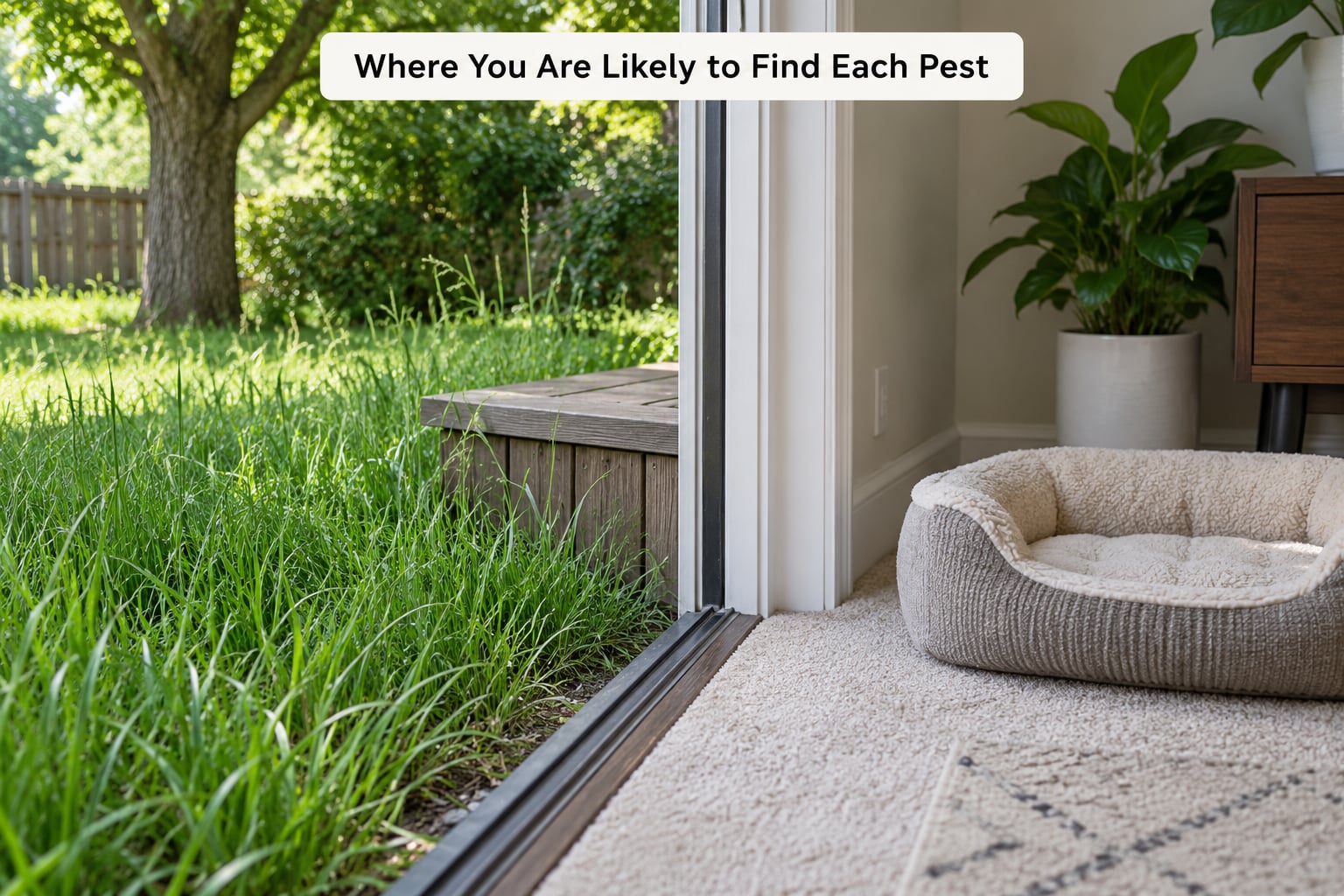
Cat fleas indoors cluster where a host rests and where moisture collects: pet bedding, rugs, carpet, upholstered furniture, and the floor near a litter box or dog bed. They need warmth and humidity, and larvae die in very dry conditions.
Soil-breeding fleas stay outdoors in places where the ground stays damp and shaded. Under a deck, along a fence line, in grass close to a wall, around a kennel run, and in mulch are typical. Full sun, packed soil, and heavy foot traffic are poor habitat. That is also why coastal communities built on sand can have genuine flea problems outdoors.
Chiggers live in field vegetation, tall grass, low weeds, and leaf litter, where they wait on a host passing through. They are most active in warm, humid weather, and populations vary a lot year to year with rainfall.
Sand hoppers live in the wrack line where waves push organic debris onto the beach. They come out in numbers when you kick at the damp sand, and their shrimp-like sideways jump is unmistakable once you look.
One more indoor detail: can fleas enter the house if a pet has them? Yes. An infested pet carries eggs and larvae into carpet and bedding, and pupae already present survive in the home until vibration, warmth, and carbon dioxide trigger adult emergence. A quiet house can suddenly have a lot of adult fleas after a week away.
Bites, Symptoms, and Infestation Signs
Flea bites cluster low, usually on the ankles, shins, and feet, and they appear in groups of three or more. The reason is reach: a flea can jump roughly 6 to 13 inches, so from floor level it lands on the lower leg. Bites may also show up along the waistline where a pet rides against your hip.
Chigger bites show up where clothing presses against skin. The sock line, the waistband, the back of the knee, the armpit edge, and under tight straps are the usual suspects. Bites often start as small red bumps that later blister, and the itch can be severe and persist for a week or two.
The timing difference is useful. Flea bites show up through the day and into the night while you are in an infested space. Chigger bites usually appear hours to a day after being in the field, and you usually notice them when you get out of the shower.
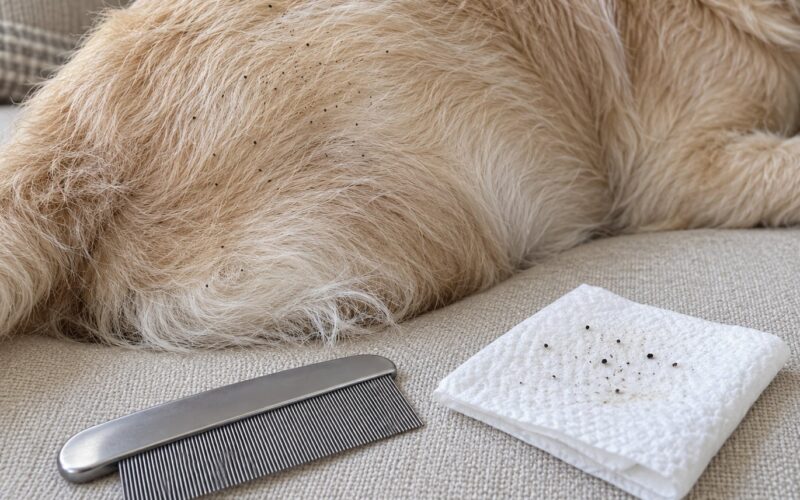
Visible evidence matters far more than the mark itself. Fleas leave flea dirt, which is digested blood feces that looks like pepper grains on bedding and pet coats. Put those specks on damp white paper and they smear into a reddish halo. Chiggers leave nothing behind; the mite is gone before the itch starts.
How to identify sand fleas vs cat fleas
Work through this in order, because each step rules something out.
- Where the bites are. Ankle height on the lower leg points to fleas, since fleas jump from the floor. Bites at a waistband, sock line, or other clothing edge point to chiggers, which cannot jump.
- Timing. New marks appearing overnight in a room you sleep in suggest fleas. Marks that show up in the morning after a day in grass, woods, or a crawlspace suggest chiggers.
- Visible evidence. Check the pet’s coat, bedding, and carpet for jumping specks or pepper-like dirt. Test any specks on damp white paper. No dirt and no fleas means an outdoor mite is more likely.
- Host access. Fleas need a warm-blooded host. An empty house with no pets, no rodents, and no stray traffic has no flea population, whatever anyone calls the bites.
- Season and location. Fleas ride all year indoors in a heated home. Chiggers are a warm-weather outdoor problem and disappear after a killing frost.
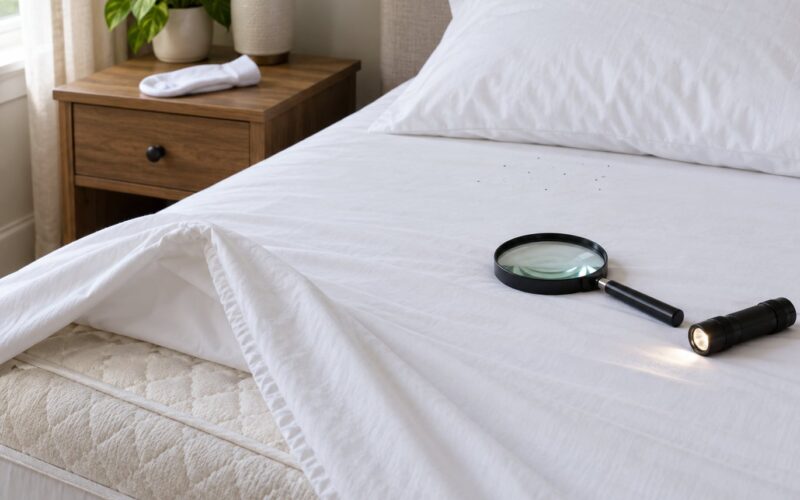
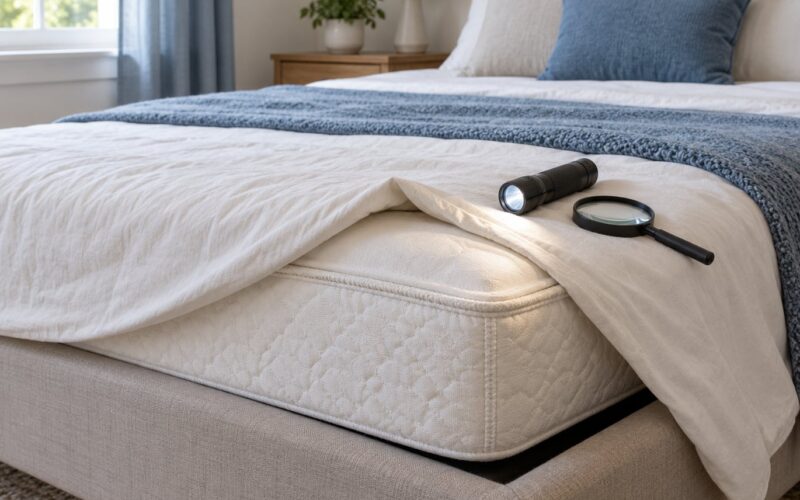
- Get a sample checked. If the answer still matters for treatment, collect a bug or a few specks in a sealed container or zip bag and ask a veterinary clinic, a county extension office, or a pest professional to look at it. A hand lens and a look at flea dirt will settle most cases.
Be skeptical of anyone who diagnoses from bite appearance alone. Flea bites, bed bug bites, and mosquito bites are routinely confused with each other, and a photo of skin does not settle it.
How Each Pest Develops and Spreads
The chigger life cycle is simple. Females lay eggs in field vegetation, larvae hatch and seek a host, and the larvae attach and feed once. After several days they drop off, burrow into the soil, and develop into nymphs and adults that do not bite. There is no indoor population, which is why chigger bites stop when you stop going outside, and why treating indoor carpets for chiggers is a waste.
Cat fleas are a full four-stage cycle: egg, larva, pupa, adult. The adult female lays eggs on the host, which fall off where the animal rests or sleeps. Eggs hatch into larvae that feed on dried blood and organic debris in carpet, bedding, and soil. Larvae spin a pupal cocoon, and inside that cocoon they wait.
That cocoon is the reason indoor infestations feel unpredictable. Pupae resist most contact sprays, and they can sit for weeks or months. Physical cues like footstep vibration, body heat, and exhaled carbon dioxide tell them it is time, and a burst of adults emerges at once. People who travel often come home to a house that suddenly seems infested.
Only a small share of a flea population is adult and on the animal. Most are eggs, larvae, or pupae off-host in the environment, which is why treating the pet alone does not clear a home and why treating the home without treating every pet repopulates it.
Chigoe fleas follow a different pattern. The female burrows into the skin, usually through the foot, and her body swells as she feeds over the following days. She is difficult to remove by hand, and removal without killing her can leave a ruptured abdomen and a severe inflammatory reaction.
Prevention and Treatment Differences
Chiggers respond to exposure reduction rather than indoor pest control.
- Wear long pants tucked into socks, long sleeves, and closed shoes when working in grass or woods.
- Apply an insect repellent containing DEET or picaridin to exposed skin and to clothing, following the label.
- Wash clothing and shoes after outdoor work, and dry them on high heat when the label allows.
- Mow tall grass and keep vegetation trimmed back from frequently used paths.
- Sit on a blanket or a folding chair instead of directly on the ground.
Cat fleas need a coordinated approach, and the order matters.
- Treat every pet in the home with a veterinarian-recommended product, and treat them on schedule for the full interval. Never use a human insect bite product on a pet.
- Vacuum thoroughly and often, with attention to carpet edges, upholstery, baseboards, and under furniture. Vacuuming removes adult fleas, digested blood, and stimulates dormant pupae to emerge into contact where they can be killed.
- Wash pet bedding and human bedding that the pet rests on, using the hot water and dryer settings the fabric allows.
- Address pet access points such as the litter area, kennel, and entryway, where new adults arrive from outside.
- Use an insect growth regulator such as pyriproxyfen or methoprene where appropriate, to stop eggs and larvae from developing.
- Call a pest professional if the infestation continues after two to three weeks of consistent work, and a veterinarian if the pet is anemic, has a tapeworm, or is uncomfortable.
Several common money-losers are worth naming. Foggers do almost nothing for fleas because the adults live on the host and the cocoons are protected where they rest. Ultrasonic repellers have no supporting evidence. Diatomaceous earth is slow and ineffective in carpeted, shaded areas where people and pets walk. Boarding the pet out of the house can make things worse, because pupae survive undisturbed and the pet carries new fleas back in.
For chigoe flea bites, do not dig out the flea yourself. Have it removed by a clinician in a way that kills it, and keep the wound clean.
This is general information, not medical or veterinary advice. Anyone with fever, spreading redness, swelling, or a pet with pale gums, lethargy, or anemia should see a doctor or veterinarian promptly.
Which Should You Choose?
You are not choosing between products here. You are deciding which problem you have, and then the response follows.
If the bites are at your ankles and go away when you leave the house, and you have pets, you have cat fleas. Treat all pets, vacuum consistently, wash bedding, and consider a professional if it does not clear.
If the bites appeared hours after being in grass, tall weeds, or woods, and they sit along clothing lines, you have chiggers. Reduce exposure and use repellent. There is nothing to treat indoors, and pet flea products will not help at all.
If the bites cluster around the ankles after a day at the beach in the warm months, you may have neither. Biting midges and no-see-ums cause exactly this pattern, and sand hoppers do not bite anyone. Repellent and cover-up address those.
If you have a painful embedded nodule on the foot after travel to the Caribbean, West Africa, or parts of South America, think tungiasis and get it looked at by a clinician rather than treating it as a bite.
The practical takeaway is that sand fleas vs cat fleas differences only matter once you identify which pest you actually have. Pet flea treatments and outdoor exposure reduction are two different jobs, and mixing them wastes both money and time.
Frequently Asked Questions
Are sand fleas and chiggers the same thing?
No, and this is the single biggest source of confusion. Chiggers are the larval stage of trombiculid mites, tiny, about 0.4 mm, that attach to skin at clothing lines and feed for several hours. Cat fleas are wingless insects that jump. Most people who describe sand fleas in US yards and fields are describing chiggers, though cat fleas breeding in moist soil also get the name.
Can cat fleas bite people?
Yes. Cat fleas feed on cats, dogs, rodents, and other warm-blooded animals, and when pets are absent or numerous they readily bite people too. Bites typically cluster on the ankles and lower legs because a flea jumps roughly 6 to 13 inches. Fleas also transmit the tapeworm Dipylidium caninum and are linked to flea-borne typhus.
How can I tell if my dog has fleas?
Comb the dog with a fine-toothed flea comb over the back, the neck, and the base of the tail, then check what lands on a damp white tissue. Live dark moving specks confirm fleas, and digested blood creates a reddish halo. Also look for dark pepper-like flea dirt in the coat, bedding, and sleeping spots. Persistent scratching, hair loss, or hot spots point to the same problem.
Do sand fleas live indoors?
It depends which creature you mean. Cat fleas, including those called sand fleas, can live and breed indoors in carpet, pet bedding, and furniture, so sand fleas can infest a house. Chiggers cannot. They live in soil and field vegetation and cannot sustain an indoor population. Coastal sand hoppers also stay outdoors at the shoreline and never move into the home.
How long do chigger bites last?
Usually one to two weeks of intense itching, sometimes longer. The mite itself feeds for only a few hours and is not present when you notice the itch. The red, sometimes blistered bump appears hours later, and scratching prolongs it and raises infection risk. Cool compresses, calamine or hydrocortisone, and an oral antihistamine can take the edge off; medical care is sensible if the reaction is severe.
Should I use the same flea treatment for outdoor bites?
No. Frontline and other pet flea products kill fleas and have no effect on chiggers, biting midges, or sand flies. If your bites came from outdoor grass or woods, the fix is repellent, protective clothing, and washing gear. If they came from a pet or an infested room, use veterinary flea treatment on every pet plus vacuuming and bedding care. Applying the wrong one leaves you paying for nothing.
What to Do First
Note where the bites appear and when they start. Ankle-height marks that show up overnight point to fleas; marks along a waistband or sock line that appear the morning after being outside point to chiggers.
Check your pets, their bedding, and your own sleeping areas for live fleas or pepper-like dirt, and do the wet paper test on anything you find. If the evidence is there, treat every pet and start vacuuming on a schedule rather than once.
If the pattern points outdoors, reduce exposure: long pants tucked into socks, closed shoes, and repellent on skin and clothing. There is no indoor infestation to treat.
If nothing is clear after a week, collect a specimen in a sealed container or zip bag and take it to a veterinary clinic, a county extension office, or a pest professional for identification. Getting it right the first time costs far less than treating the wrong pest for a month.