Adult fleas survive roughly 1 to 2 weeks without a blood meal, but flea pupae sealed in silk cocoons can stay dormant for months and occasionally close to a year. Most of the fleas in an infested home are not adults at all, and none of those immature stages need a pet to survive.
That gap between the two numbers is the whole reason fleas seem to outlive every attempt to ignore them. Empty the house for a month and come back, and the carpet seems to erupt. Keep treating only the dog, and bites keep showing up on your ankles. The answer to how long fleas can live without a host in a house depends entirely on which life stage you are looking at and what the room feels like to them.
This guide walks through each stage, the indoor conditions that stretch or shorten the timeline, where to look for evidence, and a step-by-step plan for clearing the house.
Table of Contents
- How Long Can Fleas Live Without a Host?
- Does a Flea Need a Host to Survive?
- What Conditions Let Fleas Survive Indoors?
- Can Fleas Live in Bedding, Carpets and Furniture?
- How Can You Tell If Fleas Are Living in Your House?
- How to Reduce Fleas Living Without a Host Indoors
- When Should You Call Pest Control?
- Frequently Asked Questions
- What to Do First
How Long Can Fleas Live Without a Host?
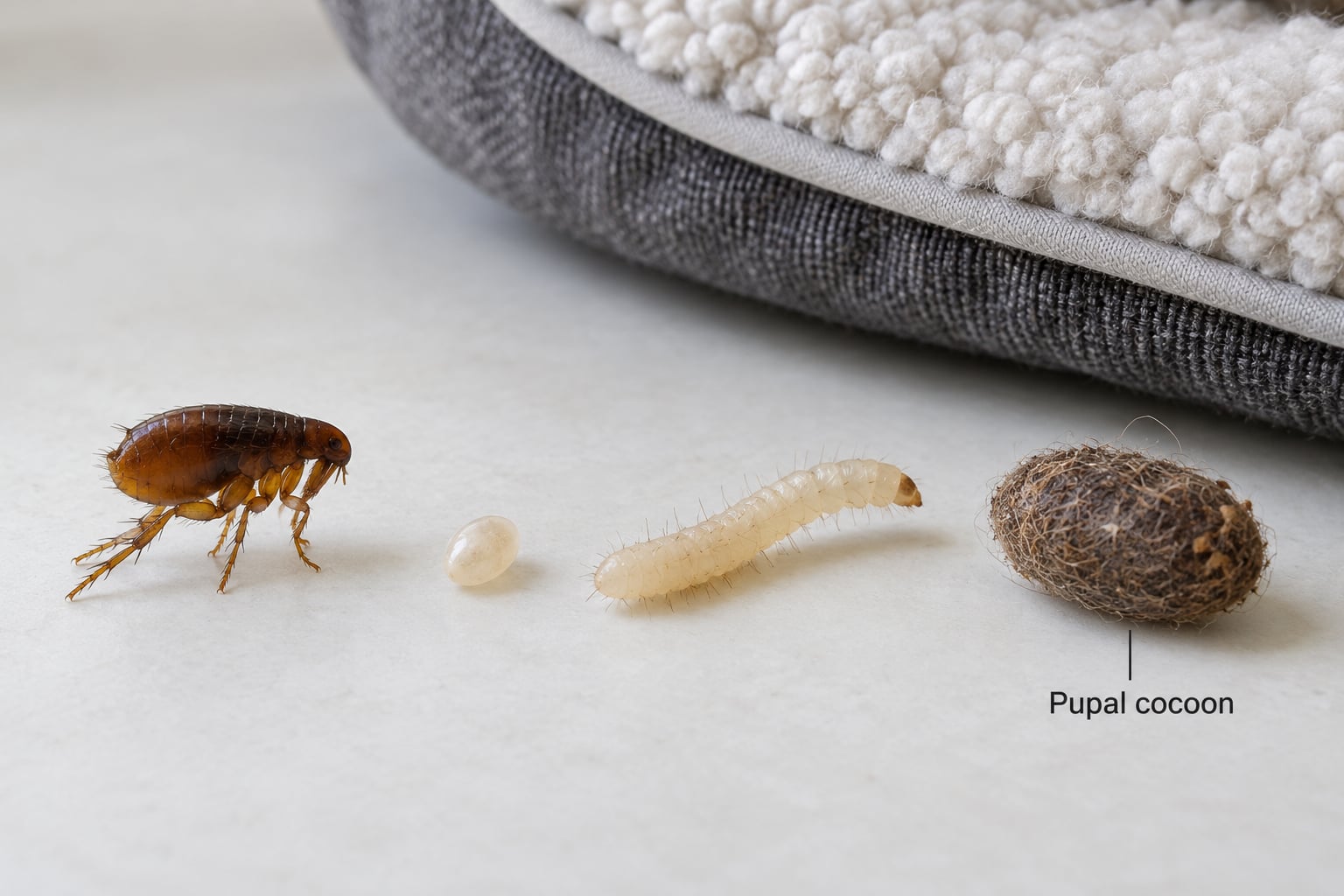
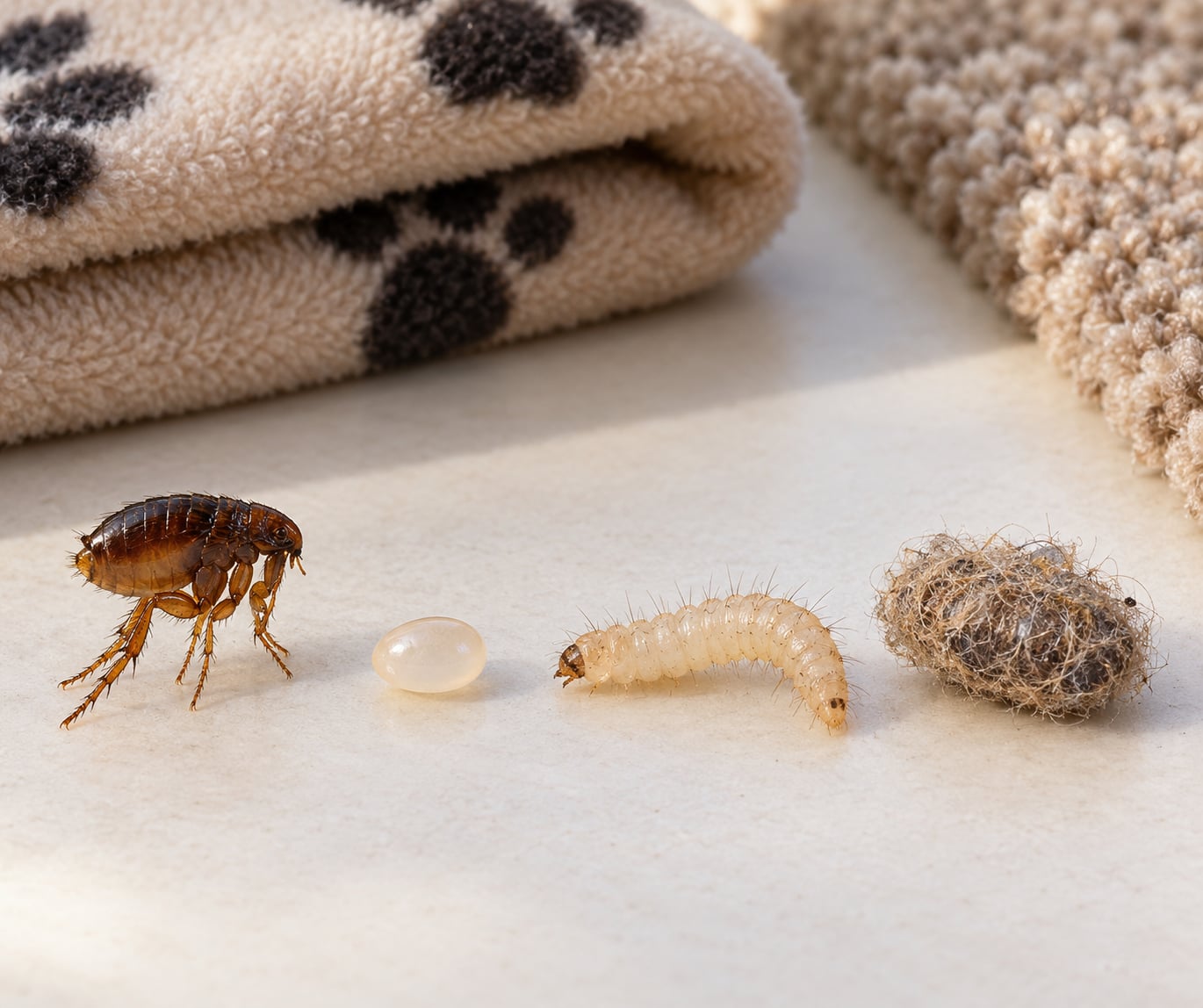
Here is the short version. An adult flea that has already fed usually manages about a week to two without finding a host, and a hungry newly emerged adult may only manage a few days. A flea egg that has not been kept warm and damp usually hatches within roughly 2 to 14 days. Larvae feed on organic debris and dried blood, not blood directly, and survive somewhere around 5 to 20 days in typical indoor conditions. Pupae are the long-haulers, staying cocooned anywhere from a couple of months to close to a year while they wait for the right signal.
| Life stage | What it feeds on | Typical time without a host | Longest reported survival |
|---|---|---|---|
| Egg | Nothing; needs warmth and moisture to hatch | 2 to 14 days to hatch | A few weeks in cool, damp, sheltered spots |
| Larva | Flea dirt, skin flakes, organic debris in carpet fibres | 5 to 20 days | Roughly a month in cool, humid conditions |
| Pupa | Nothing; sealed in a silk cocoon | A few months | Close to a year in a protected indoor harbourage |
| Adult (fed) | Blood meal from a warm-blooded host | About 1 to 2 weeks | Roughly 100 days in ideal indoor conditions |
| Adult (unfed, newly emerged) | Nothing yet; must find a host quickly | Often only 1 to 4 days | Rarely past about a week |
You have probably read that fleas live 100 days without a host, and separately that they survive a year. Both figures are right, just not about the same thing. The 100-day figure usually refers to adult fleas in favourable indoor conditions, and it depends heavily on whether that adult is fed or freshly emerged. The year-long figure almost always refers to pupae, not to adults. Once you split those apart, the numbers stop contradicting each other.
One more wrinkle worth knowing: the “pupa” is really three stages wrapped together. The larva spins itself into a cocoon and becomes a prepupa, then develops into a pharate adult still inside that cocoon, then finally pushes out as a free adult. That inner prepupa and pharate adult are the reason people assume the whole house has to be frozen, heated or sealed to kill the population. Nothing gets sealed off from them permanently; they simply wait for a cue.
Does a Flea Need a Host to Survive?
Only the adult needs a host, and only for one reason: eggs. A blood meal fuels egg production, which is why a single fed female dropped into a quiet house can turn into a large problem in a few weeks. The larvae and pupae around her never needed an animal at all.
Does a Flea Need a Host to Reproduce?
Yes, and this is the part that catches people who think removing pets solves the problem. A female flea typically begins laying eggs within a day or two of feeding and produces eggs steadily while she has access to a host. She lays them on the animal, and they fall off wherever that animal sits, sleeps and rests.
Since immature stages make up the overwhelming majority of any flea population, a handful of adults can seed hundreds of eggs across carpets, bedding and furniture before they ever die. One flea alone cannot build an infestation, which answers the question people ask on forums constantly: no, a single flea cannot multiply. Two can.
Set the numbers aside for a second and follow the biology instead. Adults feed, eggs are laid, larvae eat debris, pupae wait. Every stage after the egg runs without an animal.
What Happens When a Flea Leaves a Host?
An adult flea that drops off a pet does not panic and does not instantly die. It becomes a jumping, light-sensitive insect looking for body heat, vibration and exhaled carbon dioxide, and it can move several feet in a series of jumps.
Without a blood meal it burns through its stored energy. Newly emerged adults have almost no reserves, which is why they survive only a few days. Adults that already fed last longer, sometimes approaching a couple of weeks in a warm house. Many simply never leave, because an empty house offers nowhere better to go.
What does not happen is a clean die-off. Eggs already laid stay put, larvae keep feeding on debris, and pupae stay put until someone walks in. That is why vacating a house for weeks rarely works, and why a house with no pets at all can still produce bites.
What Conditions Let Fleas Survive Indoors?
Fleas are tropical by origin, and a typical heated home is close to their comfort zone. Warmth speeds their development, and humidity keeps eggs from drying out. Chilly, dry conditions slow them down and cut their odds without reliably killing anything that is already tucked into a cocoon.
| Indoor condition | Approximate range | Effect on fleas |
|---|---|---|
| Typical heated home | 68-75F, 40-60% humidity | Flea development continues steadily; adults active year-round |
| Warm and humid | 75-85F, 70%+ humidity | Fastest development, best egg survival, adults survive longest off-host |
| Hot and dry | Over 85F, under 30% humidity | Adults dehydrate quickly and larvae struggle; dry air cracks and kills many eggs |
| Cool unheated space | Under 50F | Development stalls, but pupae in protected harbourages are not killed |
| Crawl space, attic, garage | Variable, often 40-70F | Refuge for rodent-carried fleas, often overlooked during treatment |
Turning the HVAC off for a few days does not clear a house. It slows the fleas down and makes them harder to see, which is worse than useless because you still have a problem when you turn it back on. Fleas tolerate far more environmental variation than most people expect, and the pupal stage is specifically built to wait out bad conditions.
Humidity and temperature matter most in the sense of how quickly an infestation grows. A basement bedroom in a humid house can go from a handful of bites to a heavy infestation in about three weeks. The same house kept cool and dry grows slowly, and it is easier to keep ahead of.
Can Fleas Live in Bedding, Carpets and Furniture?
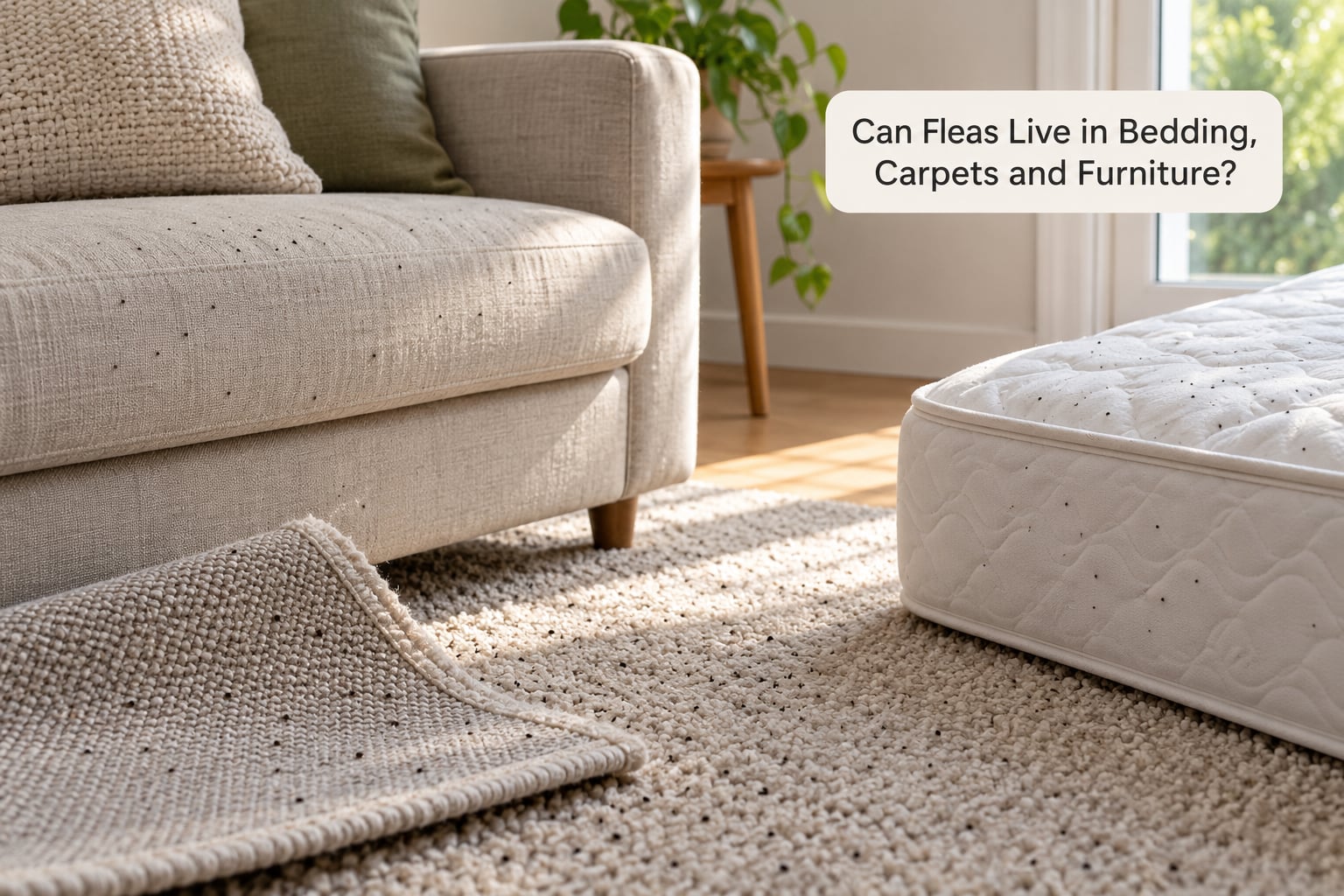
Yes, and bedding and upholstered furniture are usually worse than bare floors. Fleas prefer a spot that is warm, dark and disturbed, because disturbance is what tells them a host is close. Carpet fibres give larvae somewhere to hide from predators and give adults cover while they wait.
The places worth checking first, in order:
- Pet beds and dog crates — the highest concentration in most homes, since the animal spends hours there
- Mattresses and bed frames — eggs and larvae fall off the pet at night, and adults move along seams
- Area rugs and underlays — the pad underneath is nearly sealed in and rarely cleaned
- Sofas and upholstered chairs — especially the underside of cushions and the skirt
- Baseboards, thresholds and along the wall edges</ — where adults wait before jumping
- Crawl spaces, utility rooms and garages — where rodent hosts live
Not every small dark speck is a flea. Carpet beetles leave brown, shell-like casings and fuzzy larvae that move slowly. Springtails are tiny, pale and harmless. Bed bugs are flat, reddish-brown, and leave rust-coloured stains on sheets. Flea adults move in sudden straight jumps that no other indoor insect matches, and flea dirt looks like coarse black pepper.
If you want a specimen rather than a guess, put a white sheet on the floor where the pet rests, have them stand on it, and look for dark specks that appear and start moving. Sticky tape pressed onto a suspect surface picks up adults for closer inspection.
How Can You Tell If Fleas Are Living in Your House?
Bites are usually the first clue, and the pattern matters more than the itch. Flea bites cluster in rows of three or four on the lower legs, at the waistband, or around the ankles and shoulders, because those spots sit close to the floor where fleas jump from.
Other signs worth taking seriously:
- Flea dirt — black pepper-like specks on bedding, sofa cushions and pet beds that turn red-brown when dampened with water
- Live adults — small, dark, flattened insects that jump several inches when disturbed
- Persistent scratching or restlessness — especially in a pet that is otherwise healthy
- Activity in sleeping areas — new bites on someone who never goes near the pet’s bed
- New adults appearing from nowhere — a burst of fleas weeks after the pet was treated usually means pupae emerged, not reinfestation
How to Check Your Pet and Home for Fleas
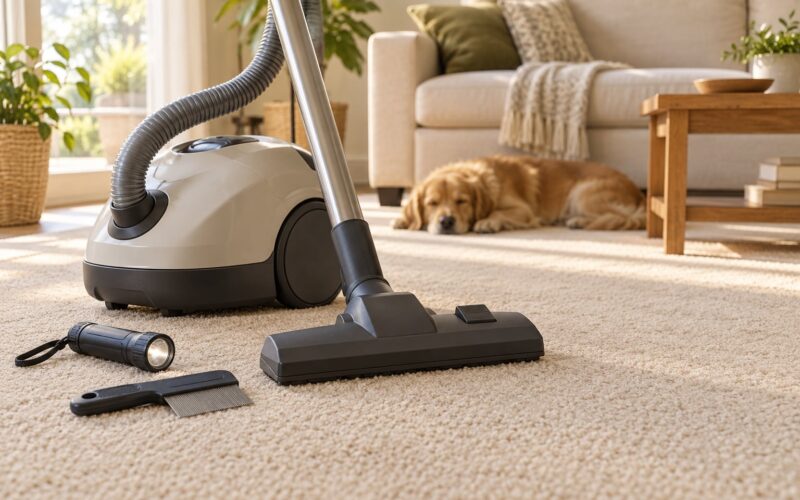
Run a metal flea comb through the coat at the base of the tail, the neck and the belly, the places fleas favour. Wipe what you pull off onto a damp white paper towel; dark specks that smear reddish mean you are looking at digested blood, not ordinary dirt.
For the house, kneel at floor level in the room where the pet sleeps and look along baseboards. Shake a small rug over a white sheet outdoors, or press a white paper towel onto the carpet and lift it. Check inside the sofa skirt and under the bed frame, where dust bunnies collect.
Have someone sit still on the sofa for ten minutes with white trousers or a white sheet over the cushion. Fleas are drawn to body heat, and if they are in the upholstery they will find you.
How to Reduce Fleas Living Without a Host Indoors
The goal is not to kill every flea on one day. It is to break the cycle so no new adults emerge, then mop up the stragglers as they come out of the cocoon.
1. Confirm you have fleas first. Get a specimen identified before you buy anything. It costs less than treating the wrong insect for six weeks.
2. Treat every pet in the home. Fleas move between animals, so treating one pet while another stays untreated resets the whole effort. Use veterinarian-approved products and follow the dosing schedule; never apply a pet flea treatment to a person, and never apply any product to a wild animal.
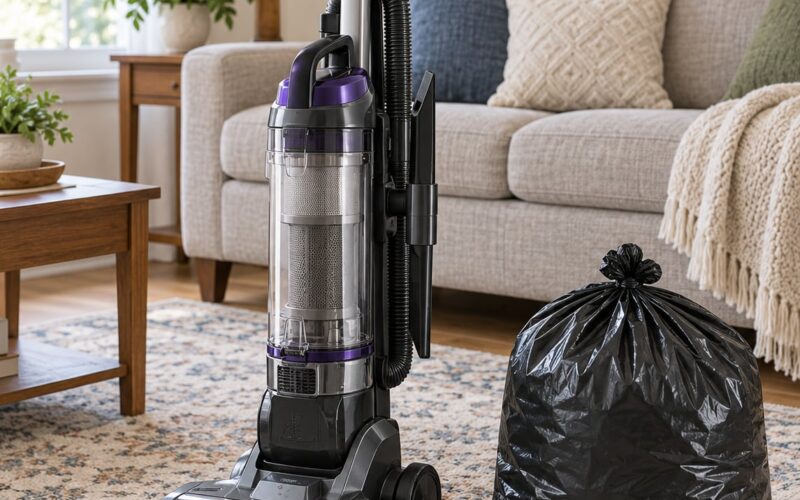
3. Vacuum carpets and upholstery daily for two weeks. Vacuum bags go straight into the outside bin, never onto the floor. Pull cushions apart and get under furniture where you can.
4. Wash pet bedding, blankets and clothing on hot. Dry on high heat. Fleas cannot survive a wash at the temperature a dryer reaches, and they cannot survive a washing machine cycle at all on their own.
5. Treat the environment with a product labelled for indoor use. An insect growth regulator targets eggs and larvae over weeks, while an adulticide kills fleas on contact. Many products combine both, and label directions always win. Foggers fail here because the spray stays in the air while the fleas stay on the floor, inside the fabric and sealed in a cocoon.
6. Keep checking for six to eight weeks. This is the part most people get wrong.
Why Vacuuming Matters More Than It Seems
The suction and the vibration of a vacuum are close to what a pupa is waiting for. It mimics the pressure and movement of an approaching footstep, and pupae that get this cue start preparing to emerge. Adult fleas are also poor climbers, so the ones you pull into the bag never climb back out.
That is why vacuuming twice in one day does more than vacuuming twice across a week, and why a single pass moves the timeline very little. Fleas that can jump land on carpet, not in a bag, unless you disturb them while the vacuum is already running.
What to Expect Week by Week After Treatment
| Time after treatment | What is normal | What signals a problem |
|---|---|---|
| Days 1-3 | Some fleas still visible; newly hatched adults appear | No change at all by day 4 |
| Week 1-2 | Visible activity continues as pupae emerge in waves | Activity clearly increasing room by room |
| Week 3-4 | Noticeable drop; bites mostly older marks | Fresh adults every single day with no decline |
| Week 5-6 | Occasional stragglers; larvae dying out | No weekly decline after six weeks of steady work |
| Week 7-8 | Flea-free in most homes | Continuing activity, or a host nobody is treating |
Bite reactions also lag. Old marks can itch for days or weeks after the flea is gone, so itchy does not mean active. Look for new marks and fresh flea dirt instead, and judge the trend by weekly count rather than by how someone feels that day.
When Should You Call Pest Control?
Professional treatment is worth it, and worth it faster, in a few situations. If you have done steady vacuuming, washing and labelled environmental treatment for six weeks with no downward trend, you have a source you cannot reach from the living room.
- A house with no pets but continuing bites. Something in the structure is supplying blood meals. Look for rodents in the attic or crawl space, raccoons or opossums in the chimney, and stray or feral cats around a garage or shed. Until that host is dealt with, treatment in the living space will not hold.
- You have never confirmed the insect. A pro identifies the specimen in minutes, which saves weeks of guessing.
- Several rooms are affected at once. That pattern usually points to a harbourage outside the rooms you can reach.
- You are renting. Most leases put treatment of an existing infestation on the tenant and require documented, written notice to the landlord first. A dated email with photos of flea dirt keeps the record clear before anyone starts arguing about responsibility.
- Multiple pets, or a severe case. Treating every animal correctly on schedule takes coordination that a technician can usually handle faster.
One more trigger: bites on people who are not the ones handling the pets, with no decline after two months of careful work. That pattern is almost always an untreated host somewhere in the building.
Frequently Asked Questions
How long can an adult flea survive without a host?
A fed adult flea usually manages about one to two weeks without a blood meal in a typical indoor home. A newly emerged adult that has never fed has no energy reserves and often lasts only one to four days. Both numbers stretch in warm, humid conditions, where adults have been reported surviving close to 100 days off-host.
Do flea eggs survive after they leave a pet?
Flea eggs do not need a host at all. The female lays them on an animal and they fall into carpet, bedding or furniture, where they hatch in roughly 2 to 14 days given warmth and moisture. Dry, hot, uncluttered conditions kill many of them, but shaded carpet fibres and the underside of furniture keep plenty of them alive long enough to hatch.
Can fleas live in a house with no pets?
They can, and it is more common than people expect. A previous pet may have left eggs, larvae and pupae behind, or rodents, raccoons, opossums or stray cats are supplying blood meals from the crawl space, attic, garage or chimney. Pupae can sit dormant for months, so a house can look fine for weeks and then produce fleas with no animal present at all.
How long do fleas stay in carpet or bedding?
Every stage except the adult can persist in fabric for weeks, and pupae can stay dormant for months, occasionally close to a year. Pet bedding and area rugs are the worst spots because they are warm, sheltered and repeatedly disturbed. Washing pet bedding on a hot cycle followed by high heat drying kills what is in the fabric, which is why that step matters.
Will vacuuming alone get rid of fleas?
On its own, no. Vacuuming removes adults, some larvae and many eggs, and it stimulates pupae to emerge into an environment where you can catch them, but new adults keep arriving as long as untreated pets or a hidden host keep producing eggs. Combine daily vacuuming with labelled indoor treatment and hot-washed bedding for the best result.
How soon should I recheck after treating my home for fleas?
Check at one week, then weekly until week eight. Fleas emerging from pupae can keep activity going for two to three weeks after treatment, so early sightings are normal and do not mean it failed. Look for a weekly decline in fresh bites and fresh flea dirt. No decline at all after six weeks of steady work means you need a professional.
What to Do First
Work out which stage you are dealing with, because that sets your expectations. Adults jump and bite, larvae live in debris, and pupae sit invisible in cocoons waiting for vibration, warmth and carbon dioxide.
Today: comb the pet over white paper, check pet bedding and sofa cushions for flea dirt, and vacuum carpets and upholstery thoroughly with the bag going straight outside. Wash pet bedding and blankets hot and dry them hot.
This week: get every pet in the home onto a veterinarian-approved treatment and apply an indoor product according to its label. Check the crawl space, attic and garage for rodent or wildlife access. Then vacuum daily for two weeks and watch for a weekly decline instead of an overnight one.
The countdown to a flea-free house is measured in weeks, not days. Anyone who promises otherwise is selling something. For the full picture of how long fleas can live without a host in a house, track the weekly trend rather than the worst day.