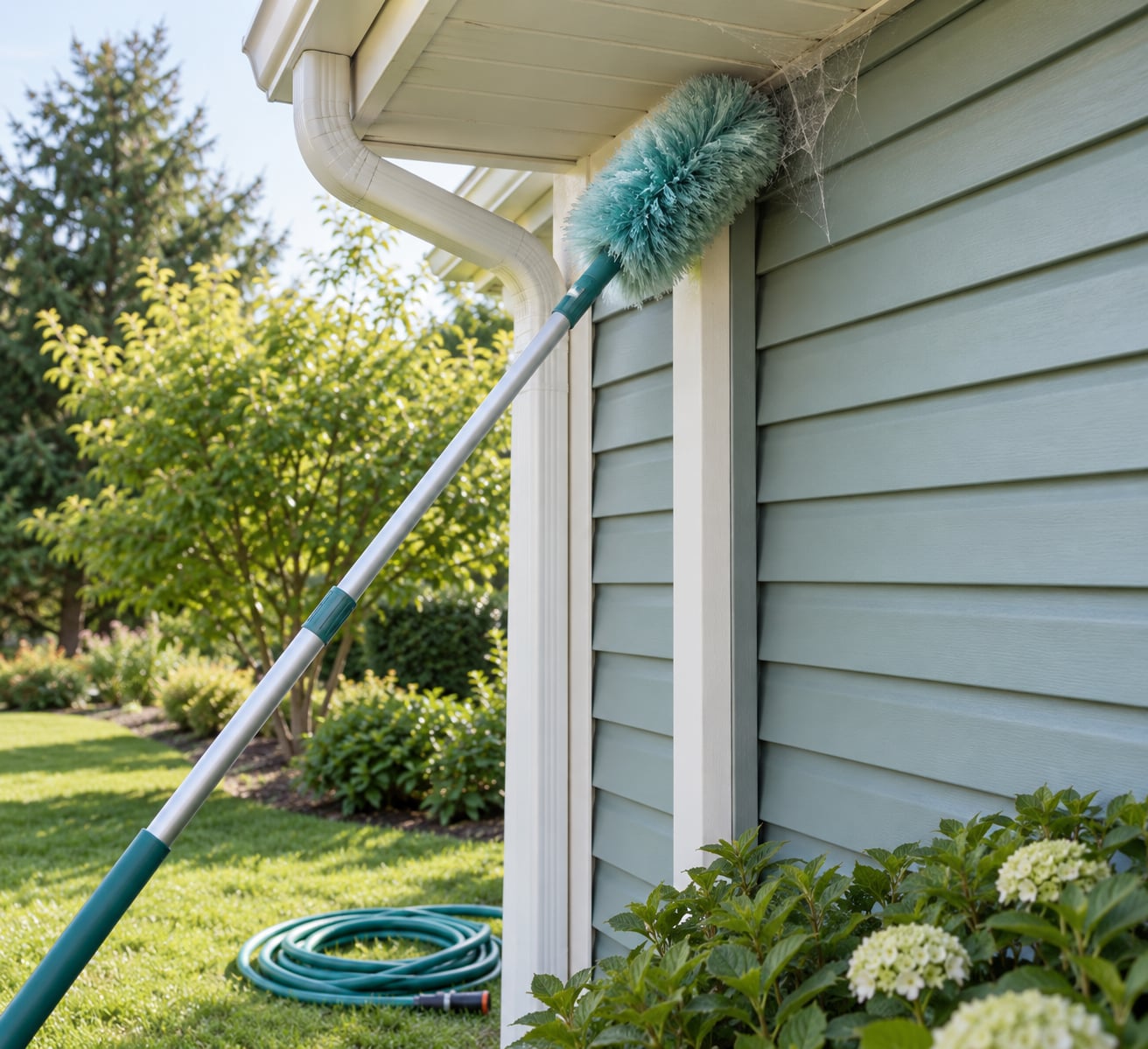
Spider webs come off siding with a dry cobweb duster on an extension pole, then a light wash of mild dish soap and water for whatever residue is left behind. On a typical two-story side wall that is about 30 minutes of work, and most of that time goes into corners, soffits, and the tangle around porch lights.
The reason the dry method works so well is that spider silk is built to hold onto anchor points, not to cling to a smooth wall. Knock the anchors loose and most of the web goes with them. What stays behind is a faint, sticky shadow of residue that a soft brush and a little surfactant lift off without touching the finish.
Two rules run through everything below. Never spray or wash water upward into siding laps, because panels overlap to shed rain down and out, and water driven up under them gets trapped against the sheathing. And never mix bleach with ammonia or with acidic cleaners like vinegar, because that combination makes toxic gas.
What You Need
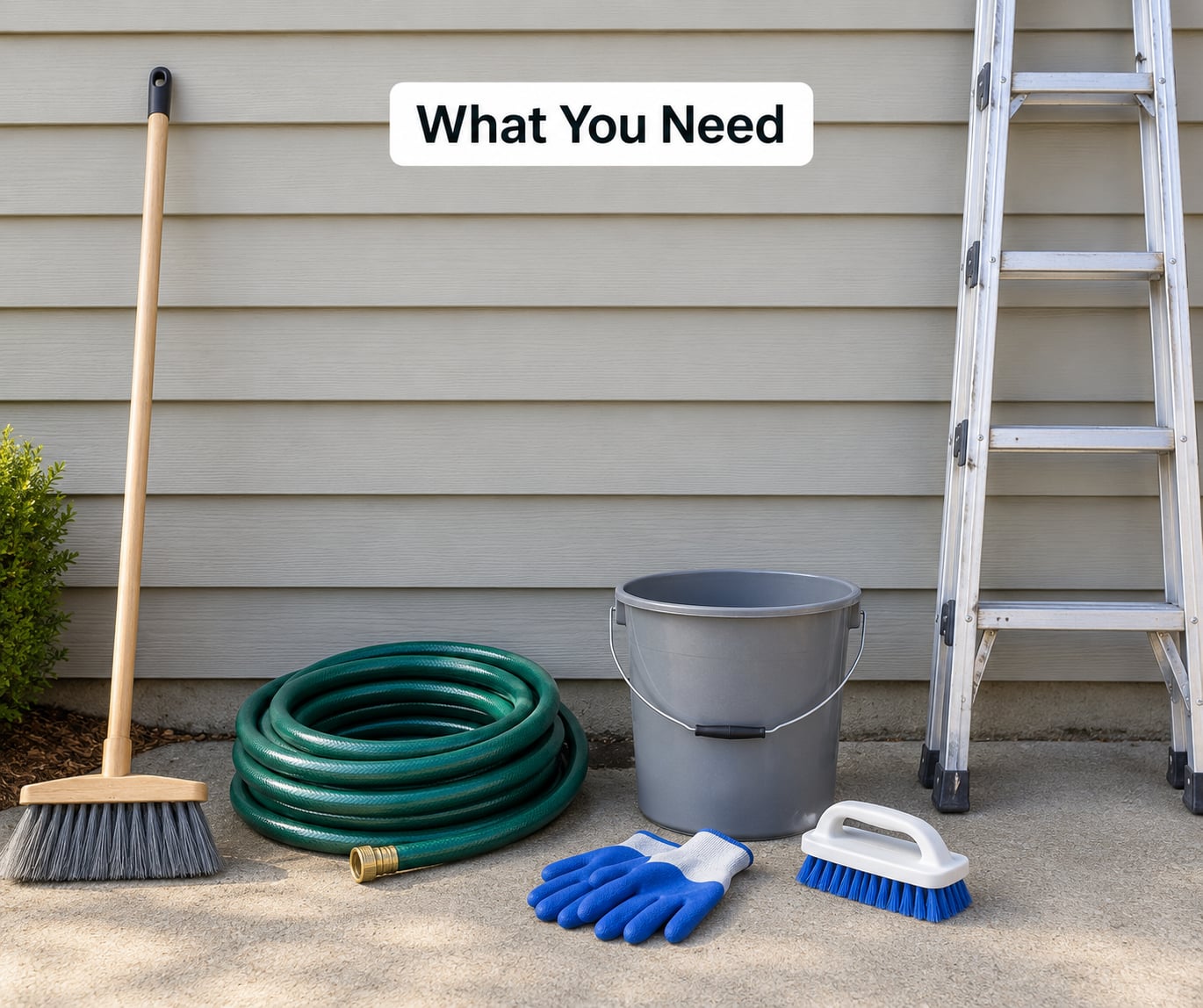
Most homeowners can do this with things already in the garage. Knowing how to remove spider webs from siding safely starts there, because the one purchase worth making is a telescoping cobweb duster, which is a soft microfibre or lambswool head on a pole that reaches the second story without a ladder.
- Cobweb duster on an extension pole — the best all-round tool. Works on vinyl, fiber cement, wood, stucco, and brick without any chemical at all.
- Soft-bristle broom or brush head on a pole — good on flat panels and wide walls where a duster head is small.
- Old sock or damp rag wrapped over a pole — a cheap trick homeowners use on corner boards and porch rails, where the profile catches silk.
- Leaf blower on low — blows silk off without any contact, so it is safe on delicate wood and painted trim.
- Garden hose with a fan or jet nozzle — only for rinsing residue, held level and pointed down, never up.
- Bucket, dish soap, soft brush, garden sprayer — for the second pass on stuck-on residue.
- Work gloves, and a ladder you trust if you truly need one — plus knowledge of where your electrical service entrance is.
On safety: put on gloves and eye protection, move planters, hoses, and furniture away from the wall, and cover or close any electrical outlet covers, exterior sconces, hose bibs, and low-voltage lines you will be working near. Water and electricity do not mix, and siding work puts a wet tool close to both.
Pick an overcast or mild morning. Direct sun on a wet vinyl panel shows every streak you leave, and wind spreads overspray toward your plants.
How to Remove Spider Webs from Siding Step by Step
1. Inspect the siding and identify what you are looking at
Walk the wall before you touch it. Fresh silk with a spider still anchored in it is active nest, while dusty, sagging, rain-darkened webbing in a corner is an abandoned cobweb with no occupant. The difference matters if you would rather relocate than kill.
Also look for what is underneath: green or black speckling near the foundation is algae or mildew, yellow-brown runs below screws or nails are rust staining, and a bulge or soft spot under a panel is a water problem, not a cleaning problem. Bulging panels need a look from a roofer, not a jet nozzle.
Egg sacs are small, silken, usually cream or pale yellow, and about the size of a small pea. They are usually attached in corners and under eaves. Wipe them off with a gloved hand or the edge of a duster before they hatch.
2. Choose a dry-removal tool for the siding
Start dry, always. Dry removal is faster, needs no water near your foundation, and cannot damage a finish.
For vinyl and aluminum, a cobweb duster on a pole handles most of it in a single pass. For fiber cement, use light pressure, because the surface is matte and scuffs more easily than people expect. For wood and painted wood, keep to a leaf blower on low or a very soft brush, since some older wood siding is brittle at the edges and will chip. Stucco and brick are the toughest, and there a stiff broom on a pole saves a lot of time.
A leaf blower alone will not lift silk stuck to a textured corner, but it clears most of the sheet webbing first, and then a duster finishes the anchors.
3. How to remove spider webs from siding without pushing residue into gaps
This is the part that separates a good job from a fast job that has to be redone. Start at the eaves and soffits, then work down each wall, finishing near the foundation.
Follow the shape of the panel as you go. On lap or shingle-style siding, the duster head should travel along the bottom edge of each course rather than straight up the wall, so the silk lifts off the lip instead of being pushed into the seam behind it. Use light pressure and a second overlapping pass.
Corners, corner boards, window sills, downspouts, and the underside of light fixtures are where the real build-up is. Sweep everything down to the ground as you go, pick it up, and then look at the wall again from an angle before you move on.
4. Treat remaining marks based on the siding material
What is left is residue, and it needs a surfactant more than it needs a solvent. Fill a garden sprayer or a bucket with water and a squirt of mild dish soap, roughly one tablespoon per gallon.
Spray it on, let it sit five to ten minutes so it can wet through the silk, then work the spot with a soft brush in the direction of the grain or the lap. Soft brush only. Abrasive pads, wire brushes, and stiff nylon wheels will scratch vinyl gloss and chew into fiber cement.
A vinegar solution, roughly one part white vinegar to four parts water, is an alternative that homeowners report weakens heavier webs enough that they slump on their own. Skip it on limestone or natural stone, where acid etches the surface, and never follow vinegar with any bleach product.
Skip bleach entirely unless you have a specific stain you are trying to kill, because it will bleach plants, grass, and shrubs within a few feet and it corrodes fasteners over time.
5. Rinse carefully and let the siding dry
Rinse from the top down with the hose on a fan or gentle jet, holding the nozzle level and pointed slightly down. Never aim up under a lap or into a soffit vent.
Keep water away from window tracks, door thresholds, vent openings, and any opening in the wall, and keep the runoff away from your foundation planting. Direct the water down onto the panel below and let it run off the way the manufacturer intended.
Let the wall dry fully before you check it, because damp vinyl hides streaks. Walk the house again from an angle with the sun behind you, and treat any residue you missed while it is still fresh.
Common Mistakes That Damage Siding
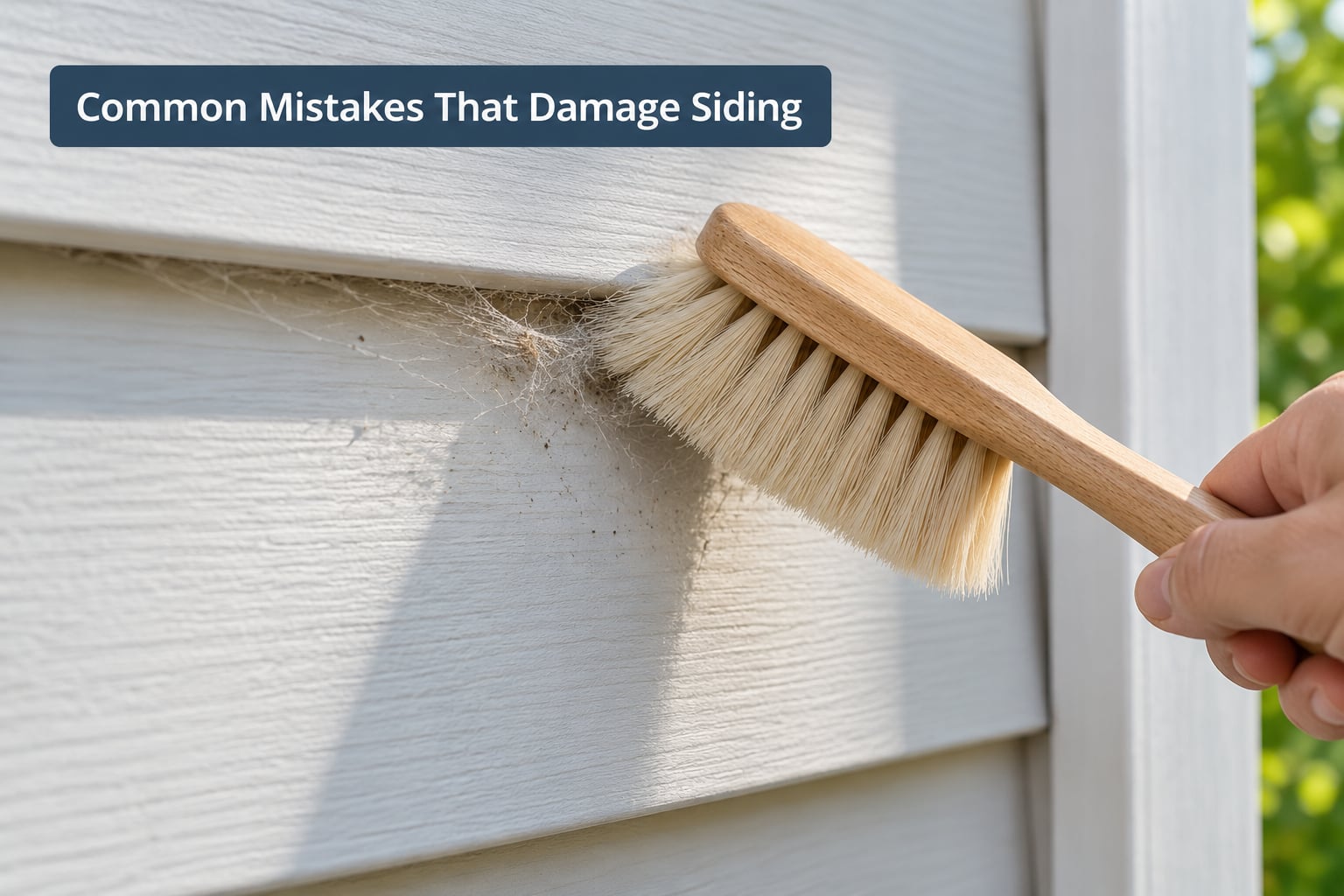
Pressure washing is the big one. Industry guidance for exterior washing is a wide 40-degree tip, a working range of roughly 1,300 to 1,600 PSI, and a wand held level at eye level. Anything narrower, and especially any upward angle, forces water behind the panels where it cannot dry, and trapped moisture against the sheathing leads to mold, soft rot, and warranty complaints. Plenty of homeowners have also reported that a pressure washer will not remove most webbing from wood siding at all, so they end up with a wet, streaked, still-webbed wall.
Scraping with a putty knife or metal edge is the second mistake. It gouges the profile and leaves bright marks that show on every new paint job.
The rest are smaller but common:
- Spraying an unknown chemical on a wall you cannot identify. Test any cleaner in a hidden spot, behind a downspout, for a full day first.
- Working from an unstable ladder. A pole duster reaches almost everywhere a ladder would, without the risk.
- Leaving soap behind. A missed rinse leaves a sticky film that attracts the dirt you just removed.
- Cleaning during full sun or strong wind. Both streak the siding and spread product onto your plants.
- Stopping after removal. The webs come back within a day or two unless you change the conditions.
Prevention is what makes removal last. Trim shrubs, branches, and tall grass back at least three feet from the foundation, which cuts off the anchor line between the spiders and your siding, and it is the step homeowners most often credit with a real drop in web density.
Look at your outdoor lighting too. Porch lights and sconces that switch on at dusk pull in insects, and the spiders follow the insects. Switching to warmer bulbs, tightening the shade, or keeping fixtures tight against the wall reduces the whole chain.
Then, once the webs are gone and the wall is dry, apply an exterior cobweb repellent to corners, eaves, and light fixtures. These products work by leaving a slick film that new silk cannot bond to, so they only help on a surface that is already clean. Apply them on a still, dry day and keep them off shrubs and open blooms until the label says they have dried.
A light cadence beats a deep clean: a quick duster pass in spring before you list the house, another in early fall before the season peaks, and a check of the light fixtures each time you walk out the door.
Frequently Asked Questions
Will removing spider webs from siding cause damage?
Not if you stay dry and soft. A cobweb duster, a soft broom, or a leaf blower on low only touches the silk and nothing else. Damage happens when a scraper, an abrasive pad, or an upward pressure-wash spray hits the panel. Silk itself is harmless to vinyl, fiber cement, wood, stucco, and brick, so take your time rather than reaching for something harder.
What is the safest way to clean spider web residue off siding?
A solution of water and a squirt of mild dish soap, left to sit five to ten minutes, then worked with a soft brush and rinsed top down with the hose on a fan spray. Soap is a surfactant, so it wets the silk and lifts it off instead of dissolving it. Never combine it with bleach, and never let rinse water run behind a lap.
Can I use a pressure washer to remove spider webs from siding?
You can, but it is rarely worth it. Webbing anchors into corners and laps where water-driven force does not reach, and homeowners regularly report webs still hanging after a full wash. When you do wash, use a wide 40-degree tip, hold the wand level at eye level, keep it around 1,300 to 1,600 PSI, and never aim upward into a lap or a soffit vent.
Should I remove a spider along with its web?
The spider will not be harmed if you clear the web from underneath it, and most will relocate rather than fight for a web that is already gone. Check before you sweep: silk that is tight, fresh, and has a spider on it is active, while dusty sagging webbing in a corner is abandoned. Relocate by letting the spider walk into a cup and carry it away from the wall.
How do I keep spiders from rebuilding webs on my siding?
Change the habitat and the surface together. Trim shrubs and branches back at least three feet from the foundation, reduce the insects around outdoor lights with warmer bulbs and tighter shades, and once the wall is clean, apply an exterior cobweb repellent to corners, eaves, and fixtures so new silk has nothing to bond to. Expect to refresh the repellent every few weeks in peak season.
Conclusion
Knowing how to remove spider webs from siding safely starts with knowing your siding, then taking the webs off dry with a duster or soft broom on a pole, working from the eaves down. Handle whatever residue is left with mild dish soap and water and a soft brush, rinse level and top down, and keep every spray pointed away from the laps. If you want the job to hold, trim the landscaping back and treat the clean wall with a cobweb repellent.