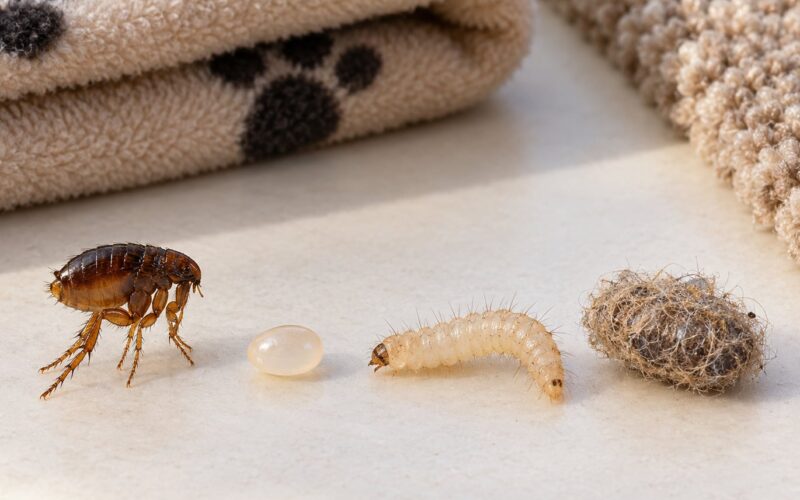
You can get rid of fleas without bombing the house, but not with one product. You have to clean the environment, treat every pet at the same time, and repeat the whole routine for three to four weeks so the eggs and larvae already laid never become adults.
That last part is where most people give up. They fog the house on a Saturday, see a few dead fleas, and declare victory on Sunday. What actually happened is that you killed the adults that were already out in the open and left roughly 95 percent of the population untouched in carpets, bedding, upholstery seams and baseboard cracks.
This guide walks through the full no-fogger protocol, what it costs in time, and when a professional call is worth it. If someone in your home reacts badly to bites, start here rather than at the aerosol can.
Table of Contents
- What You Need
- Step-by-Step
- 1. Confirm where fleas are hiding before you spend money
- 2. Treat every pet in the home on the same day
- 3. Vacuum carpets, rugs, upholstery, and floors properly
- 4. Wash bedding and other washable items on hot
- 5. Clean the cracks, baseboards, and pet resting spots
- 6. Use targeted flea treatment only where it is needed
- 7. Prevent new fleas from coming inside
- 8. Check for improvement over the next few weeks
- Common Mistakes
- Frequently Asked Questions
- How to Get Rid of Fleas Without Bombing the House: A Practical Plan
What You Need
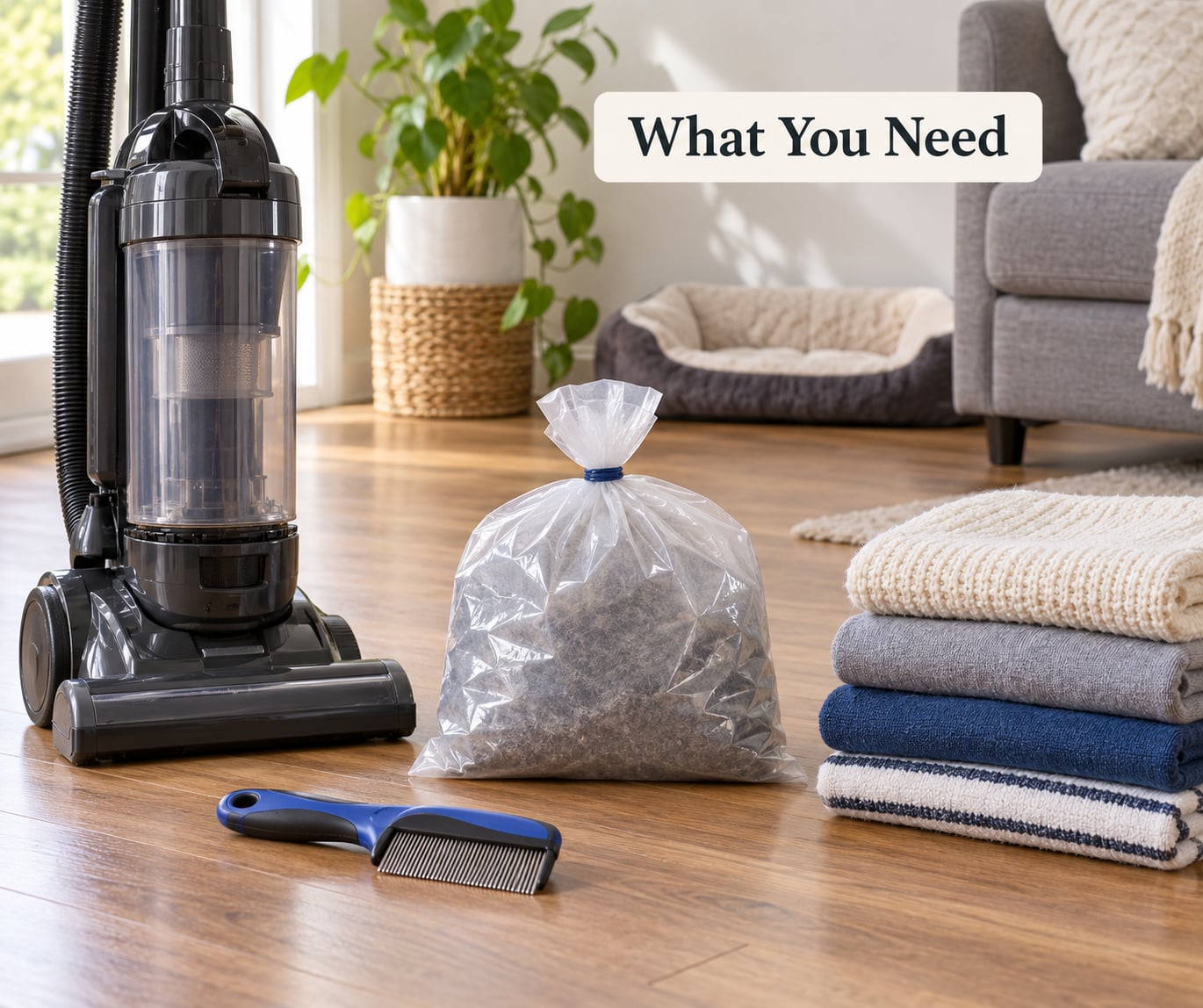
Most of the list is equipment you already own. The expensive part is pet treatment, and that is the part you cannot skip.
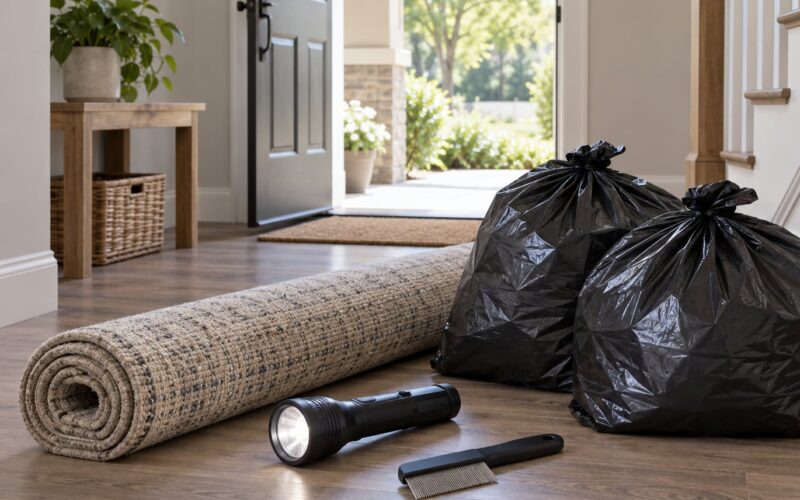
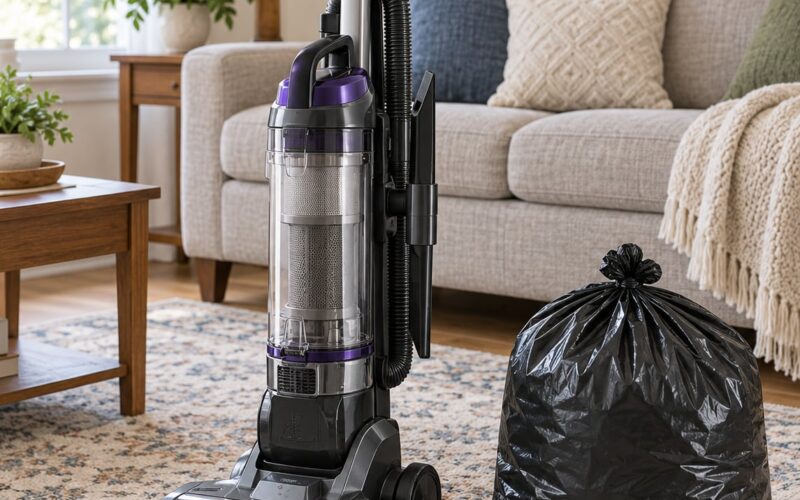
- A vacuum with real suction and attachments. A handheld without a crevice tool will not lift eggs out of carpet edges. A beater head or brush roll matters more than brand.
- Bags or sealable plastic bags. You will bag the vacuum contents and carry it out the moment you finish. Vacuuming without sealing the contents just redistributes live larvae across your floors.
- A flea comb. A fine-toothed metal comb, usually under ten dollars. It tells you in five minutes whether you still have fleas.
- Pet-safe flea treatment for each animal. A spot-on, oral tablet or collar from your veterinarian, matched to the species and weight of the pet. This is the non-negotiable item.
- Laundry detergent and access to hot water and a dryer. Care labels permitting, heat is what makes laundering count.
- Clean bedding and washable covers. Pet beds, throws, towels, cushion covers. Pull them before you start vacuuming so you are not re-lifting eggs afterward.
- Basic cleaning supplies. A stiff brush for baseboards and edges, a microfiber cloth, and your usual floor cleaner.
Optional: an insect growth regulator (IGR) for carpets and upholstery, a directional sprayer such as a hand pump mister, food-grade diatomaceous earth, borax, or a dish soap and light trap for monitoring. Skip all four on day one. Add them only once the routine is running, and only if you have read the label for the surface and for your household.
Step-by-Step
1. Confirm where fleas are hiding before you spend money
Run the flea comb through your pet’s neck, back base and tail base, where fleas concentrate. Hold it over a white paper towel and tap it; dark grit that looks like ground pepper is flea dirt, which is digested blood passing through. Wipe the towel with a damp paper towel and the specks smear into a reddish-brown stain.
For the house, sit on the carpet and move furniture slightly. Look at where your pet lies, along baseboards, in the middle of stair treads and in the seam where the carpet meets the wall. White socks make flea dirt easier to see on dark carpet.
A bite pattern helps too. Flea bites cluster on ankles and lower legs, usually in groups of three, because a flea often bites in a line. Bed bug bites land on exposed skin higher up, and carpet beetle bites show up on arms and torso.
2. Treat every pet in the home on the same day
This is where infestations survive. An untreated pet walks through the house and re-seeds the carpet daily, which is why people vacuum for weeks and see nothing. Treat all pets simultaneously, including the one that “never goes outside.”
Follow the label or your veterinarian’s dosing exactly. Spot-ons, oral preventives and collars each cover different life stages, and applying two at once without advice is how pets get into trouble. Talk to your vet before treating kittens, puppies, pregnant animals, seniors, or any pet with a health condition.
One safety note worth repeating: dog spot-ons containing permethrin are severely toxic to cats. If you have a cat and a dog, ask your vet which products are safe to use in the same home. For anything medical on a pet, that conversation belongs with the vet, not with a forum.
3. Vacuum carpets, rugs, upholstery, and floors properly
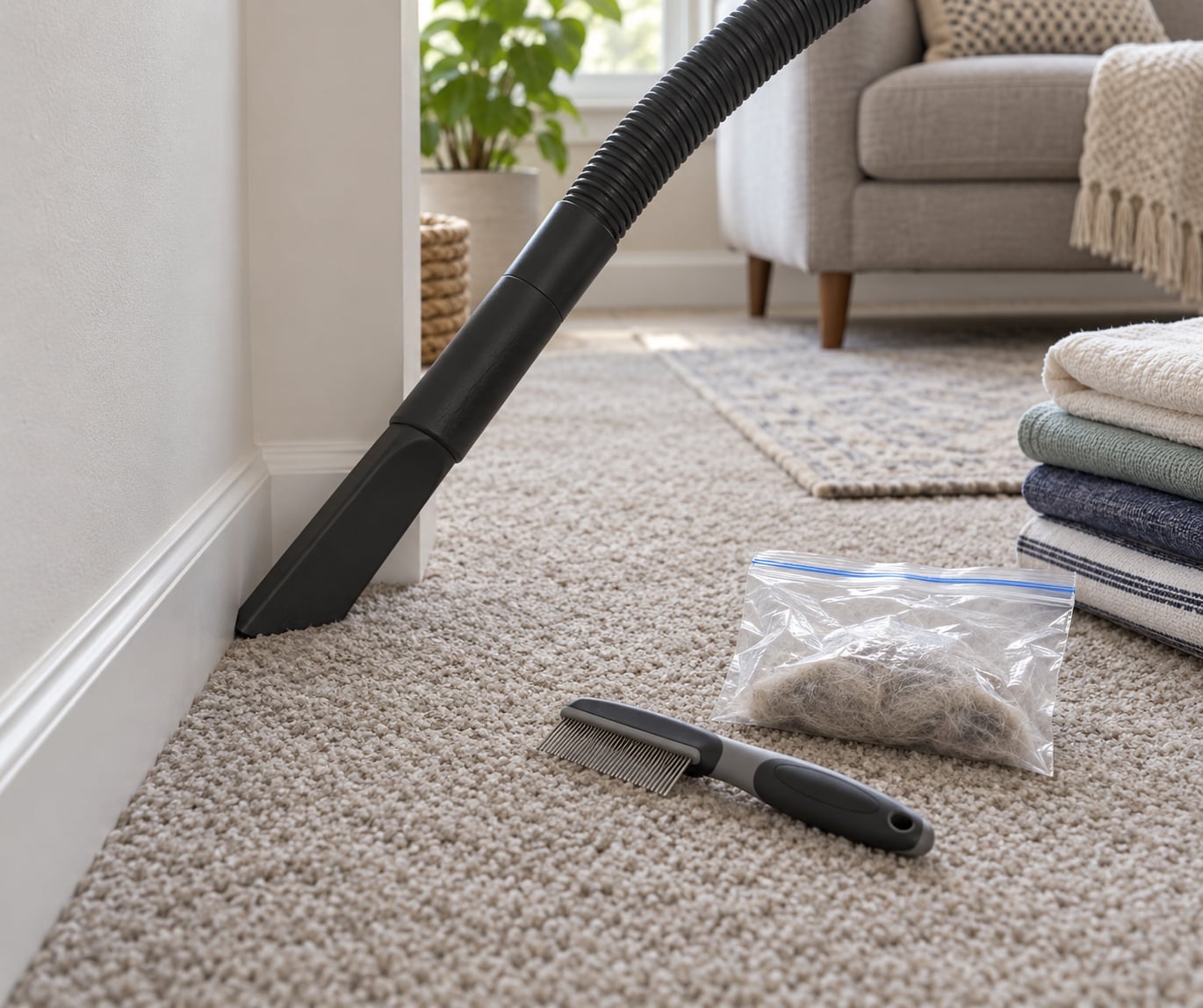
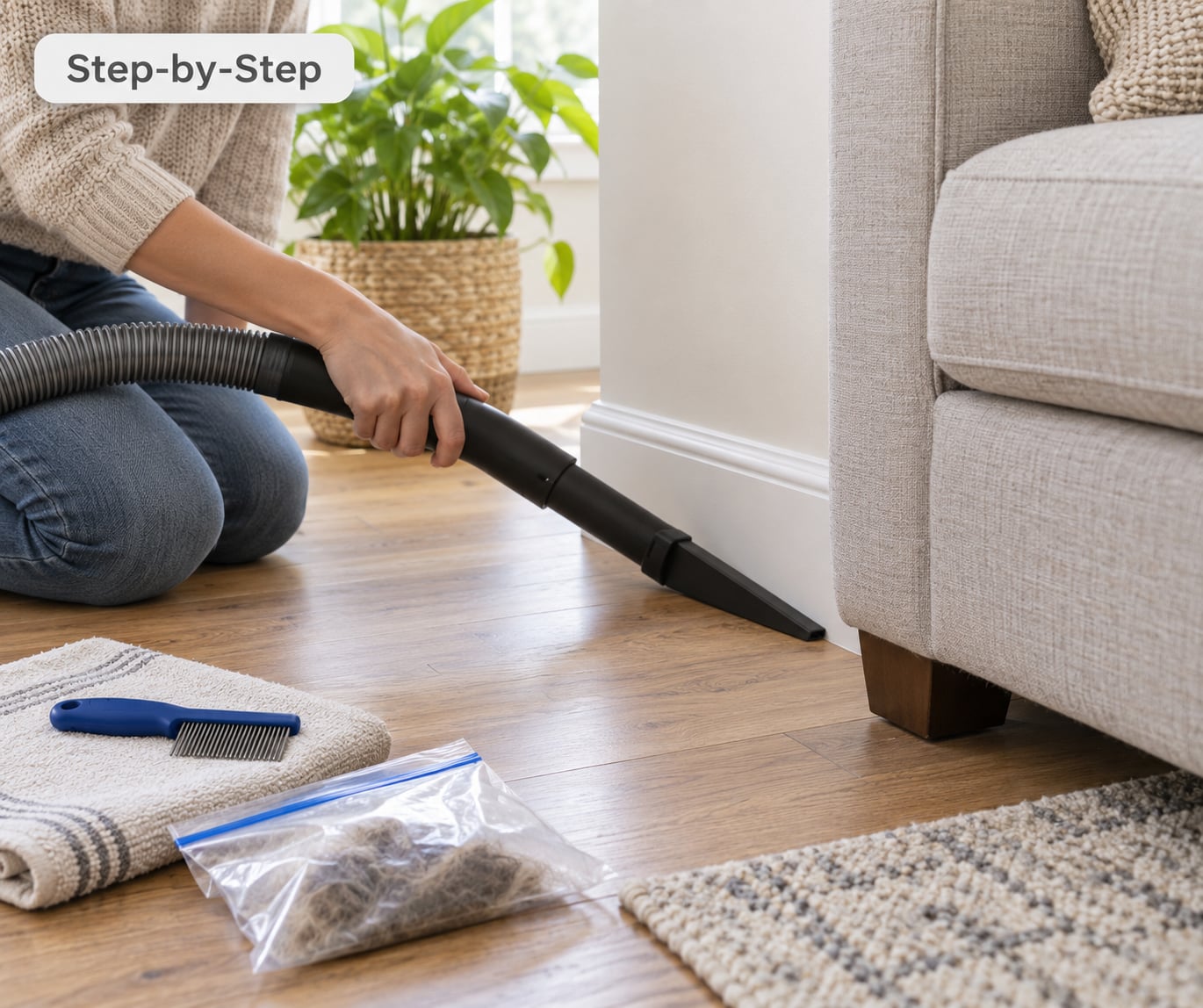
Slow passes beat fast ones. Vacuum each carpet edge along the baseboard, then move outward in overlapping rows. Hit stair edges, the seam under each cushion, the underside of furniture skirts, and every spot where your pet regularly lies down. Use the crevice tool in upholstery seams and along the wall where carpet meets baseboard.
Here is the mechanic most guides skip: flea pupae sit inside a silk cocoon that is resistant to most sprays, and they emerge when they sense vibration, warmth and carbon dioxide, all of which a vacuum produces. Vacuuming is not only removal, it is also an egg hatch command. So when you are done with a room, walk back over the same carpet immediately with the vacuum off or nozzle lifted. That second pass catches newly emerged adults that were hidden ten minutes earlier.
Bag the contents, seal or knot the bag, and take it to an outdoor bin. Repeat once a day for the first week, then every other day.
4. Wash bedding and other washable items on hot
Wash pet bedding, throws, towels, fitted sheets and any removable cushion cover that the label allows, using the hottest water the fabric tolerates. Dry on high heat for a full cycle; the dryer step kills more eggs than the wash does. Items that cannot go in the dryer can go through two full wash cycles back to back.
Clean the floor beneath the pet bed afterward. Bedding dropped back onto a carpet you skipped just moves the problem a few inches sideways.
5. Clean the cracks, baseboards, and pet resting spots
Baseboard edges, thresholds, under furniture, cabinet edges, the lip of the dryer or dog crate, and the gap between carpet and wall are all shelter. Vacuum them first, then wipe or scrub with hot soapy water and a stiff brush.
This is the answer to what do fleas hate most in the house. Fleas need a protected microclimate and steady access to a host. A clean, host-free gap that gets disturbed every day is a bad place to live.
6. Use targeted flea treatment only where it is needed
Once vacuuming and laundering are established, add one labeled product. An insect growth regulator applied to carpets and upholstery works on the egg and larval stages, which is exactly what an adulticide misses. A spray with both an adulticide and a larval component works faster in a heavy infestation but has little residual life, so it needs reapplication on schedule.
Apply exactly as the label directs, keep children and pets out until the surface is dry, and do not stack products unless a label specifically allows it. If you use food-grade diatomaceous earth, apply it thinly in dry indoor areas only, keep pets and children out while it is down, and know honestly that it is slow and easily disturbed by vacuuming.
Foggers generally do not reach fleas living in carpets, cracks and pet bedding. Aerosol droplets rise and settle back down onto exposed surfaces, so sheltered stages survive, and the residue is left on furniture and food prep areas. That is the single most citable reason bombing the house fails.
7. Prevent new fleas from coming inside
Keep every pet on a consistent prevention schedule. Treat any new or visiting animal before it comes in, and limit contact with unknown animals, especially in yards and parking lots where stray or feral animals pass through.
Run routine vacuuming on a normal schedule after the outbreak, because you now know where the trouble spots are. Check doors and windows, especially pet doors and sliding tracks, and screen any gap that rodents can fit through.
If you have no pets at all, the source is somewhere else: mice, rats, raccoons or stray cats using entry points in the garage, attic or wall voids. Set snap traps along walls in the garage and attic, use rodent bait stations rather than loose bait, and inspect for entry holes. Rodenticide alone will not fix a flea problem, because fleas come in on the animal and not on the bait.
8. Check for improvement over the next few weeks
Here is the timeline to expect, and it is weeks rather than days.
- Days 1 to 7: many adult fleas die quickly. Expect to still comb up a few. Empty the vacuum outside every session.
- Weeks 2 and 3: this is the rebound window. Pupae that survived the first sweep emerge in waves, and bite complaints often peak here. It is not proof that treatment failed.
- Weeks 4 and 5: new adult counts should fall off sharply if the cycle is broken. Keep vacuuming and keep pets on prevention.
- Beyond week 6: an occasional single flea is normal. A rising count means something is still feeding on an untreated host.
Confirm with the comb, not with your arms. Flea allergy dermatitis and bites already on the skin can persist for weeks after the fleas are gone, which is the most common reason people think a successful treatment failed.
Common Mistakes
Most failed flea attempts are the same handful of mistakes, and each one has a straight correction.
Fogging the house. It kills a fraction of adults and leaves residue where food is prepared. Fix: use a directional sprayer or an IGR on the sheltered surfaces instead, and vacuum.
Treating only one pet. The untreated animal restarts the cycle every day. Fix: treat all animals the same day, then stay on schedule.
Vacuuming and emptying the canister back into the room. Live larvae ride straight back onto the carpet. Fix: bag or seal, then carry it outside.
Using a dog spot-on around a cat. Permethrin products can be fatal to cats. Fix: ask your vet which ingredients are safe in a shared home.
Spraying every room. Broad spraying produces exposure and residue without reaching sheltered stages. Fix: target carpets, upholstery seams, baseboards and pet beds only.
Skipping the edges. Fleas live along the walls, not in the middle of the room. Fix: give the vacuum to the baseboard lines and furniture seams on every pass.
Stopping after a week. Adult fleas dying looks like progress, then week three looks like a new infestation. Fix: run the full four to six week cycle before you evaluate.
Relying on vinegar, dish soap or essential oils alone. A vinegar or peppermint spray makes a fine smell and very limited contact kill; oil-based essential products can harm pets when applied wrong. Fix: use them at most as a small supplement to vacuuming, not as the plan.
Frequently Asked Questions
Do flea bombs actually kill fleas?
They kill some adult fleas that are sitting in the open, and little else. Aerosol droplets rise and settle back down onto exposed surfaces, so fleas living in carpets, upholstery seams, baseboard cracks and pet bedding are untouched. Most of the life cycle, eggs, larvae and pupae, survives. Fogging also leaves pesticide residue on furniture and food preparation surfaces.
Can fleas survive a fogger?
Most of them can. About 95 percent of a flea’s life happens off the host, in eggs, larvae and pupae spread through carpets, bedding and cracks. A fogger deposits insecticide on open surfaces, so sheltered stages survive and emerge weeks later. That is why an infestation often looks worse a month after fogging, right when the surviving pupae hatch.
Can I sleep in my room after using a fogger?
Only if the label says so, and many labels require people and pets to stay out for several hours or longer, sometimes until the unit has been aired out for a set period. Treat that label as a minimum, not a suggestion. Keep the room closed during that window, ventilate afterward as directed, wash bedding that was in the room, and wipe exposed food prep surfaces before you use them.
What kills fleas instantly in a house?
A vacuum used aggressively on carpets, upholstery seams and baseboard edges kills more fleas faster than any aerosol, because it physically removes adults and lifts eggs out of the fibers. Flea combing tells you where the population is concentrated. No product truly kills instantly across a whole home, because most of the population is off the host and out of reach of a spray.
Will mopping with Dawn kill fleas?
It will kill fleas that the soapy water physically touches, and the detergent film can help a little on contact. It does nothing for fleas under furniture, in upholstery seams or along baseboards. A dish soap and water bowl under a light works as a monitoring trap that shows whether fleas are still active, but it will not reduce the infestation on its own.
How long does it take to get rid of fleas in a house?
Expect four to six weeks of consistent work. Adult fleas respond within days, but pupae can stay dormant for weeks and hatch when they sense vibration and carbon dioxide from a vacuum or a walking pet. Most complaints cluster in weeks two and three. If counts are still climbing past week six, an untreated pet, a rodent or a neighboring apartment is probably re-seeding the home.
How to Get Rid of Fleas Without Bombing the House: A Practical Plan
Start with three actions. Confirm the infestation with a flea comb and by checking carpets along the baseboards. Treat every pet in the home the same day, using a product your vet approves for that species. Then vacuum carpets, upholstery seams and baseboard edges daily for a week, bagging the contents and carrying it outside each time, while washing pet bedding and heat-drying it.
Add one targeted product only after that routine is running, and keep it for the full four to six week cycle. Flea control that works is unglamorous and repetitive, which is exactly why it beats anything you can spray into the air in ten minutes.